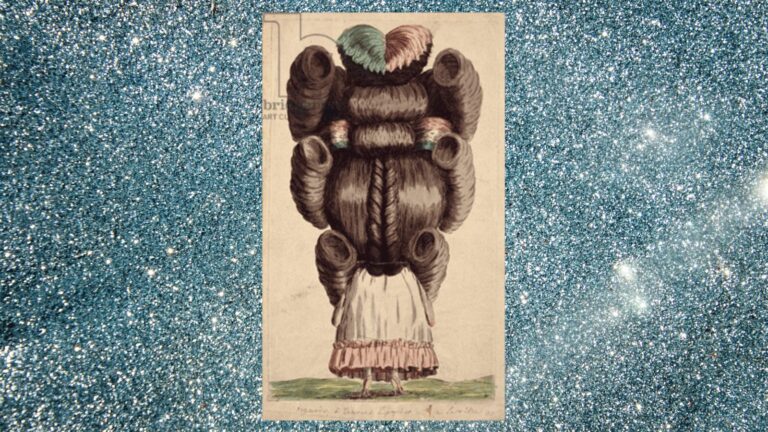
73. „In the previous post we undressed a protein. The TRPC3 ion channel as a woman with bare buttocks — „Top and Tail,” London, 1777.
Now we dress it.
The same hairstyle. The same curlers. But instead of nakedness — a skirt with ruffles. Instead of England — France. Instead of nakedness — clothing.
What does that change? Everything.
Because the skirt is not a metaphor. The skirt is nanobody Nb1-94 — a miniature camelid antibody that covers the cytoplasmic domain of the TRPC3 channel. Orange nanobody on green helices. A skirt on legs.
PDB: 9U5C. Published in 2025.
Drawn in the 18th century.
They knew. And they dressed the protein before science discovered it.”
The Wardrobe of the Genome: Top and Tail — Anatomy of an Ion Channel in 18th-Century Satire
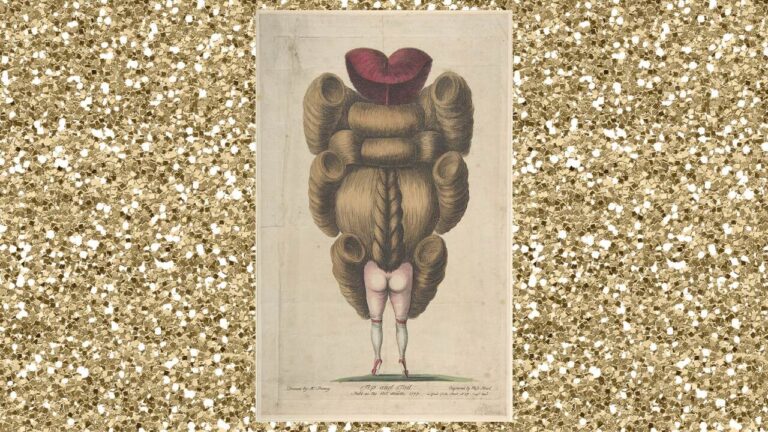
72. „London, 1777. An anonymous printmaker publishes a satirical print called „Top and Tail.” A woman seen from behind. A monumental hairstyle with curlers. Bare buttocks. Red high-heeled shoes.
A joke.
But the curlers are extracellular protrusions. The braid is the ion pore. The cushion at the top is the funnel-shaped pore vestibule. The buttocks are the cytoplasmic domain with an inhibitory calcium-binding site.
The TRPC3 ion channel. PDB: 5ZBG. Published in 2018.
Drawn in 1777.
241 years earlier.
They knew. And they had a laugh about it.”
The Wardrobe of the Genome: Pouf à l’Asiatique — AMPA Receptor GluA2
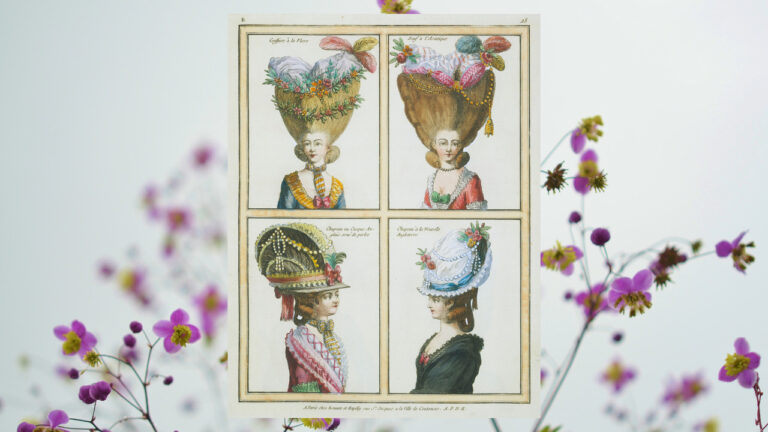
71. -Eighteenth-century Paris. A woman wears a tower of hair, feathers, and flowers on her head. Two red roses at the edges. Strings of pearls hanging between layers. Three feathers at the summit.
This is not fashion. This is a protein.
The AMPA receptor — the gate of every thought, every memory, every act of learning — encoded in a hairstyle from the fashion catalogue of Marie-Jeanne Bertin, „Ministre des Modes” to Marie Antoinette. The roses are sugar chains on the protein surface. The pearls are the polypeptide backbone linking domains. Every detail has its molecular counterpart.
The quantity and precision of these mappings leave no doubt — they knew these structures.
🔬 New entry in „The Wardrobe of the Genome” series on CellGod.live
The Wardrobe of the Genome: An 18th-Century Dress — the Armour of the HPV Virus
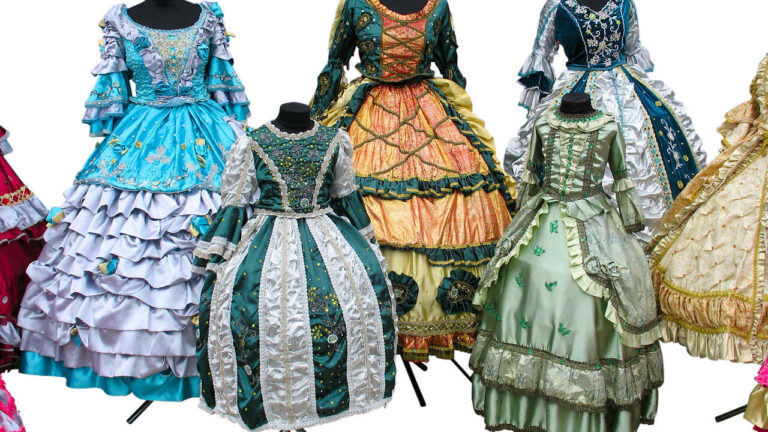
70. -Why did 18th-century dresses have two layers of skirt? Why were—and still are—dresses decorated in such a manner? And why was there that strange extension at the back, over which generations of costume-drama viewers have racked their brains? Because it was not fashion. It was a diagram of a viral protein. In the next installment of „The Genome’s Wardrobe,” I show that a historical gown recreates the L1 pentamer of the HPV virus (PDB: 8YEF)—and that the corset, made of two halves, encodes a fragment of an antibody that captures this virus.