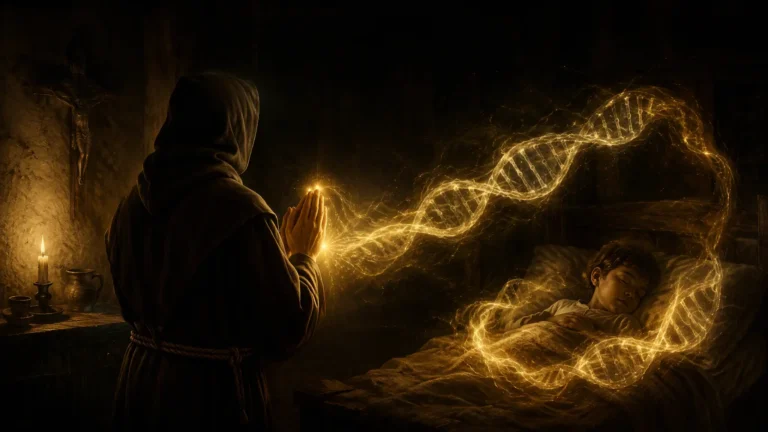
85. – Padre Pio said: when parents pray, God hears and angels act. Today the Genome confirms it — DNA is an antenna, and the word is its native language.

Bena Village – A Pancreatic Acinus in the Architecture of Flores, Indonesia
84. – In the acinar cells of the pancreas, George Palade traced the route that a protein follows from the ribosome to the exit of the cell, and he received the Nobel Prize for this work in 1974. Bena, the oldest village of the Ngada people on the island of Flores, shows the same cells from the air: houses in a single layer around a shared yard, pyramid-shaped roofs, a closed end, and a road in place of the duct.
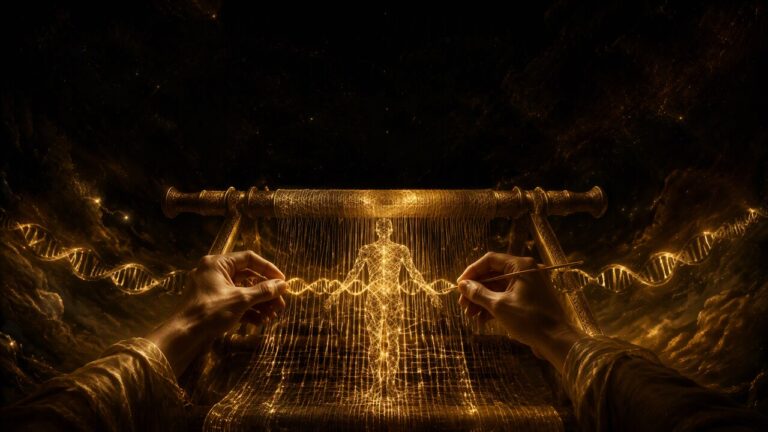
Knowledge Too Great to Understand Psalm 139 (verses 13–24) and the genome that built you, protects you, and repairs you
83. – Who built you? Not your parents — they gave you half the blueprint each. Not the doctor — he arrived after the fact. Three thousand years ago a shepherd wrote twelve verses about a craftsmanship that wove you in darkness — bone by bone, organ by organ, before anyone was watching. Today we can read those verses through the genome: the kidney genes activated in perfect sequence, the DNA book written before your first day, the quality control that hunts down proteins which betrayed the code. Psalm 139, verses 13–24 — decoded.
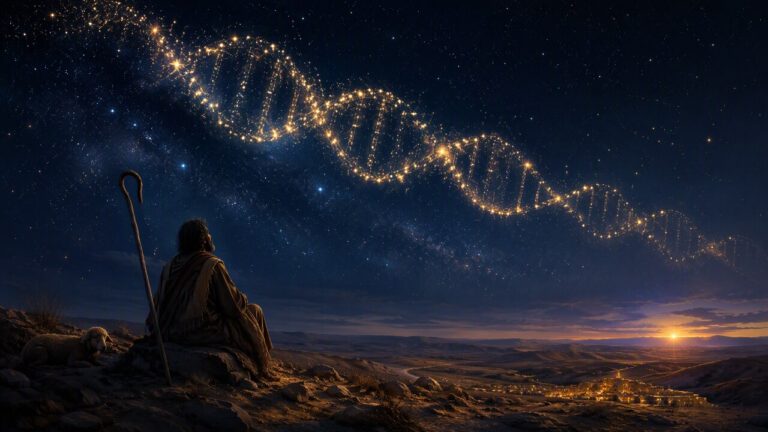
Knowledge Too Great to Understand Psalm 139 (verses 1–12) and the Genome that knows you better than you know yourself
82. – Who knows you best? Not your mother, not your closest friend, not even you yourself. Three thousand years ago a shepherd wrote twelve verses about a knowledge that knows your word before you speak it — with all its consequences. Today we can read those verses through the genome: the clock genes that switch your body between day and night, the chromatin that opens and closes with every word you hear, the code that does not stop working even in the dark. Psalm 139, verses 1–12 — decoded.

The Wardrobe of the Genome: Mr. Clown and His Giant Shoes → Kinesin-1
81. – A giant red shoe drives through New York, and nobody asks why. Clowns and oversized shoes have gone together for generations. In this post of The Wardrobe of the Genome, I decode another whole figure — Mr. Clown — and show that his costume is a precise portrait of kinesin-1, the motor protein that carries cargo along the motorways of the cell. Two enormous shoes are the two motor heads. The one-piece jumpsuit is the stalk. The round skull with two tufts of hair is the tail holding its vesicle — and the balloons in his hand are the same cargo, drawn a second time. Even his swaying walk matches how kinesin steps hand-over-hand. The clown was in the circus arena more than a hundred years before science saw kinesin. They knew.

The Voice That Falls Silent – Schema-Archimandrite Iliy (Nozdrin) and the Slow Silencing of the Genome
80. „Your genome does not have a switch. It has a volume dial. Drowsiness turns it down quietly. Sin turns it down under pressure. Prayer turns it back up. A Russian elder who began praying at the age of three described behavioural epigenetics — 60 years before science gave it a name. The third entry in the Voices of the Genome series.”
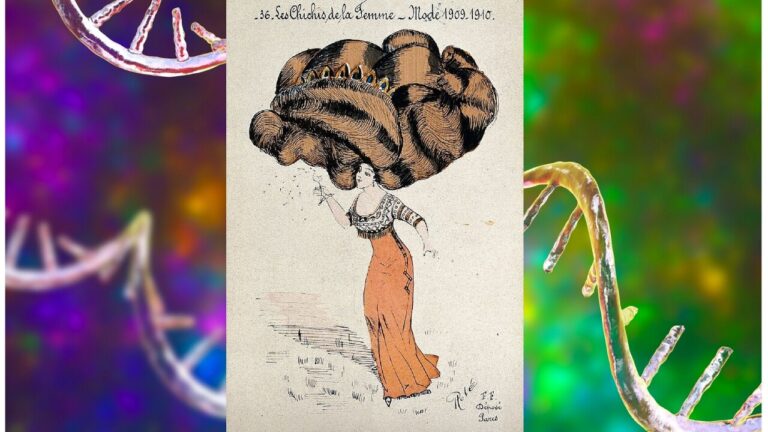
The Wardrobe of The Genome: The Postcard Lady with the Giant Hairdo → RBM39 RRM2 (PDB: 7Q33)
79. – A satirical postcard from Paris, 1909. A lady with an enormous hairstyle on a slender body in an orange dress. A joke about fashion? Yes — but also a precise map of protein RBM39 RRM2 (PDB: 7Q33). The combs in the hairstyle encode RNA. The zigzag on the dress — a branchless backbone. The embroidery on the neckline — side chains and atoms. The dandelion seeds — excised introns. Six independent matches on a single postcard, over a hundred years before this structure was solved.

Forgive and Draw Closer to God. St. Gabriel Urgebadze and the molecular cost of holding evil in your heart.
78. „Humility opens chromatin. Pride closes it. So does holding evil in your heart. A Georgian monk who burned Lenin’s portrait and lived in a chicken coop gave people a prescription that modern epigenetics confirms word for word. The second entry in the Voices of the Genome series.”

Closer Than Air. St. Silouan the Athonite and the genome hidden in your heart.
77. „Humility opens chromatin. Pride closes it. That is what modern epigenetics says. But 100 years earlier, a monk on Mount Athos said exactly the same thing — in his own words. The first entry in the new series Voices of the Genome.”

Sculptured Proteins: The Farnese Hercules — the Complete Human Mediator (PDB: 8TQW)
76. 317 cm of marble. 46 nanometres of protein. 29 subunits. One giant.
The Farnese Hercules lay buried in the ruins of the Baths of Caracalla for over thirteen hundred years. In 2024, science published structure 8TQW — the complete human Mediator, the machine that decides which genes live. A head, a torso, a detachable plinth, a weapon at the ready, a treasure hidden in a fist. And the baths where he was laid to rest? An osteoblast — a bone-building cell with secretory channels in the walls, endoplasmic reticulum in the bathing halls and mitochondria in the ramparts. Marble and bone — the same calcium. How did they know?