„The Ornate Coat of Arms of Trier as the Delta Isoform of Casein Kinase”
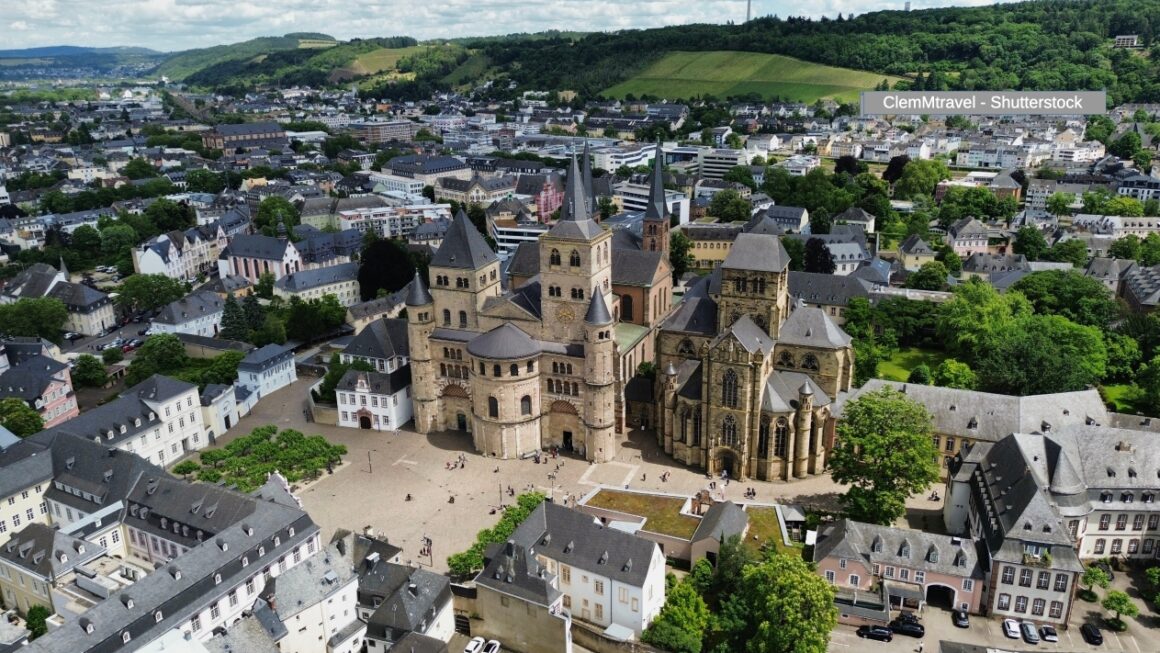
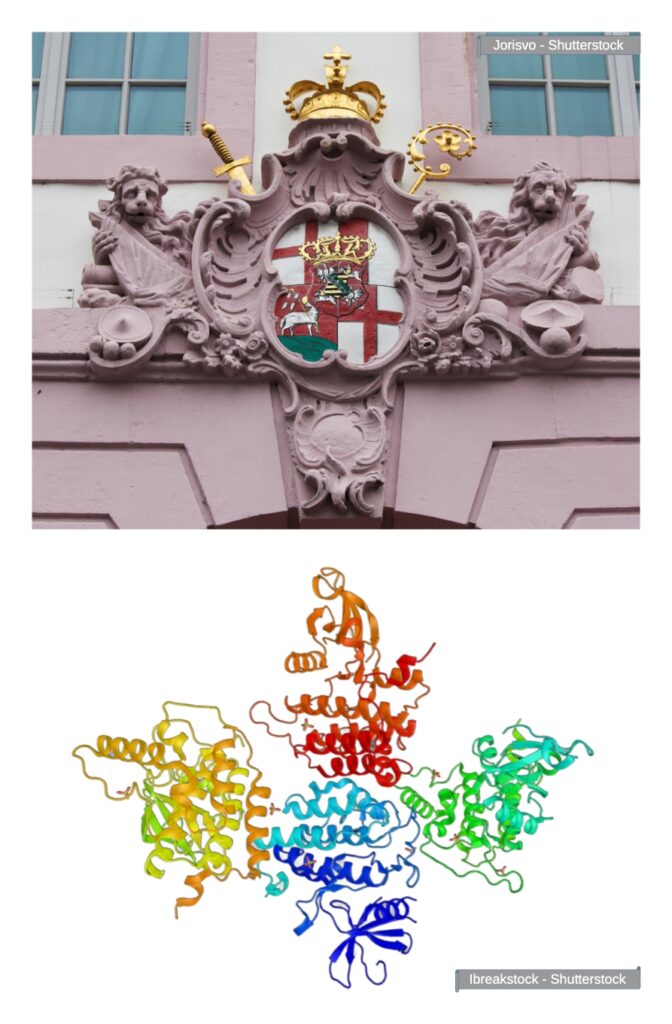
, Photo description: Coat of Arms of Trier, the oldest city of Germany.
, Illustration description: Casein kinase isoform delta enzyme, a protein which is highly similar to the mouse and rat CK1 delta homologs. 3d rendering.
, Welcome to my blog! Today, I invite you on a fascinating journey where the world of molecular biology intertwines with history and art. We will explore the ornate coat of arms of Trier, the oldest city in Germany, through the lens of the delta isoform of casein kinase. Could the city’s coat of arms become a metaphor for the molecular machinery of the cell? Let’s find out!
1. „The Heraldic Shield as the Enzyme Core” The heraldic shield, the central element of the coat of arms, can be compared to the core of the enzyme. This is where the key chemical reactions take place, just as the shield contains the most important symbols of the city. The shield is stable, strong, and serves as the foundation of the entire structure, much like the enzyme’s core is essential for its function.
2. „The Interior of the Shield with Two Maltese Crosses and a Central Emblem as the Active Site” Inside the shield, there are two Maltese crosses and a central emblem featuring an animal with a banner. This central part of the coat of arms can be likened to the enzyme’s active site, where the crucial phosphorylation reaction occurs. The Maltese crosses symbolize substrate binding sites, while the animal with the banner represents the molecule undergoing modification.
3. „The Mural Crown as the Regulatory Region” The mural crown, crowning the coat of arms, can be seen as a metaphor for the enzyme’s regulatory region. This is where processes controlling the enzyme’s activity take place, much like the crown adds a majestic character to the coat of arms and signifies the city’s status.
4. „The Sword and Floral Motif Between the Crown as Kinetic Domains” The sword and floral motif, placed between the crown and the shield, may symbolize the enzyme’s kinetic domains. The sword represents the speed and precision of the reaction, while the floral motif signifies flexibility and adaptation to various conditions.
5. „The Lions on Both Sides as Enzyme Subunits” The lions, guarding the coat of arms on both sides, can be compared to the enzyme’s subunits. They play auxiliary roles, stabilizing the structure and supporting the active site, much like the lions symbolize strength and protection.
6. „The Ornate Borders as Protein Helices” The ornate borders surrounding the coat of arms resemble protein helices, which give the enzyme its three-dimensional structure. These spiral patterns are not only decorative but also serve a stabilizing function, just like helices in proteins.
„Functions of the Delta Isoform of Casein Kinase” The delta isoform of casein kinase plays a crucial role in the cell. It is an enzyme that catalyzes the phosphorylation of proteins, i.e., the addition of phosphate groups to other molecules. This allows it to regulate numerous cellular processes, such as:
„Cell Cycle Control” – helps the cell transition through various phases of the cycle, which is essential for proper growth and division.
„Metabolic Regulation” – This enzyme participates in controlling metabolic pathways, influencing energy production and utilization in the cell.
„Modulation of Cellular Signaling” – is involved in transmitting signals within the cell, affecting its responses to external factors.
„Role in Neurodegenerative Processes” – is implicated in pathologies related to neurodegenerative diseases, such as Alzheimer’s and Parkinson’s.
„Regulation of the Biological Clock” – influences circadian rhythms by modulating the activity of proteins involved in the day-night cycle.
, The ornate coat of arms of Trier, with its rich symbolism and intricate structure, serves as an excellent metaphor for the delta isoform of casein kinase. Each element of the coat of arms from the shield and crown to the lions – has its counterpart in the enzyme’s structure and function. This analogy beautifully illustrates how the worlds of science, art, and history can intertwine. Could it be that the Cellular God also has its own „coats of arms” in the microscopic world?
Let me know in the comments what you think of this analogy! Do you see other similarities between the world of biology and heraldic symbolism?
Combining images and adding a description details made by Tomasz Mikulski – Cell God, date: 03/2025