1. The Tomb vs structure of the Animal Cell
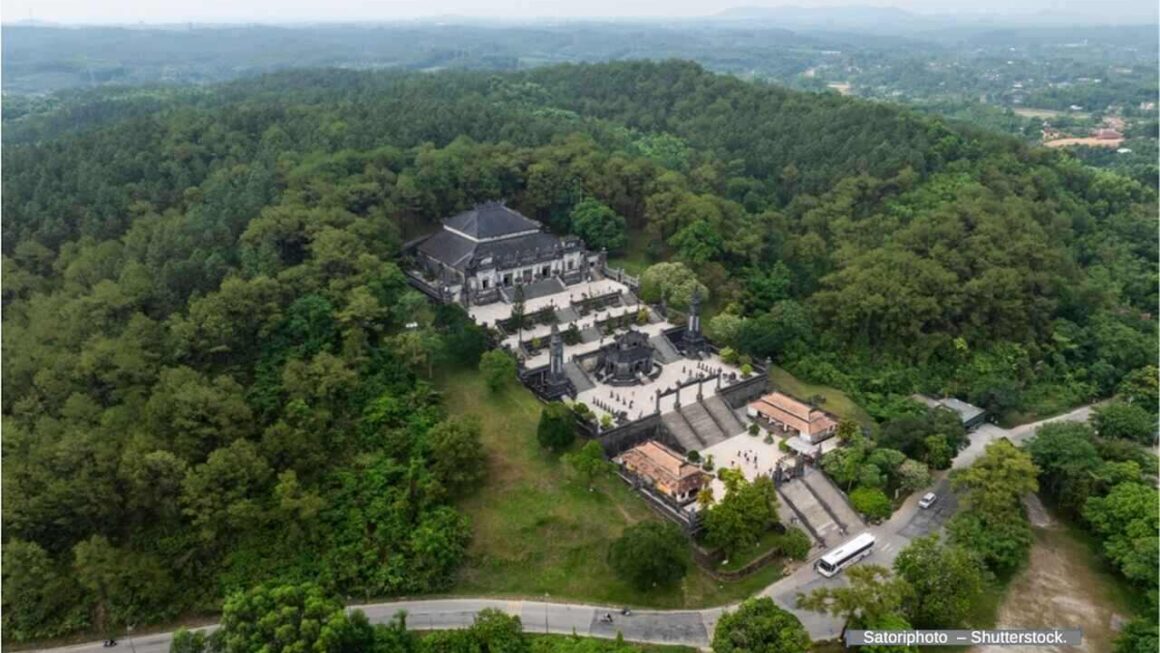
the tomb was completed in 1931 after 11 years of construction. Source. https://en.wikipedia.org/wiki/Tomb_of_Khải_Định
photo description, Imperial Khai Dinh Tomb in Hue city, Vietnam.
illustration description, Animal cell cut-away. 3d illustration.
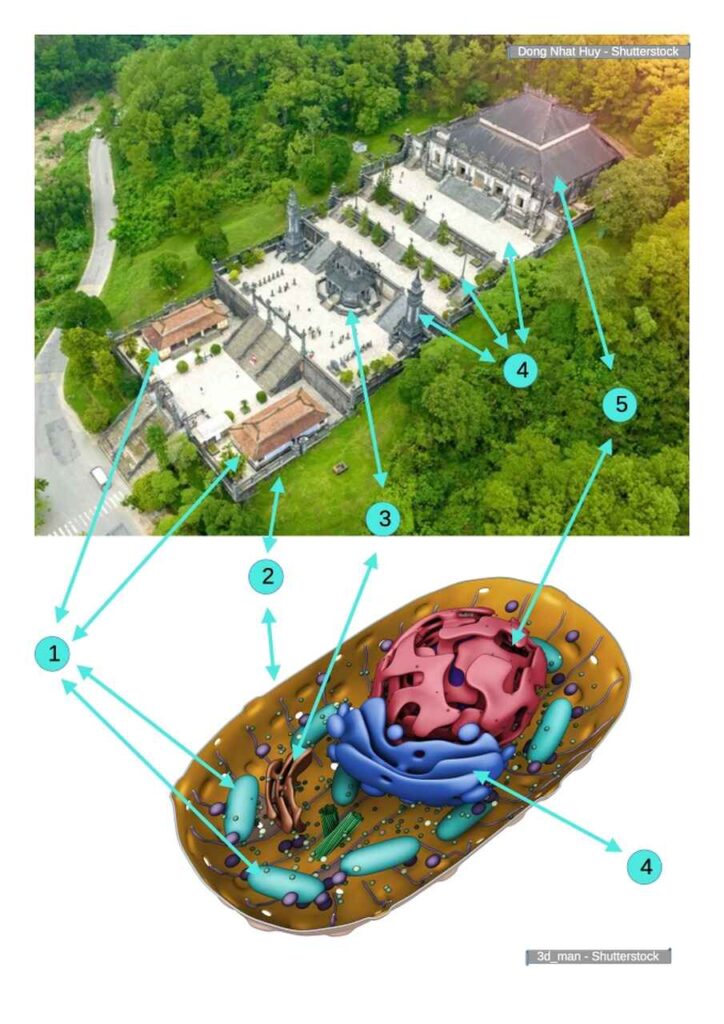
- 1. Mitochondria – they are responsible for the production of energy in the form of ATP, or adenosine triphosphate. It is the basic substance responsible for the action of every cell in our body.
- 2. Cell membrane – They protect cells from the action of physical and chemical factors.
- 3. Golgi – Golgi – it helps to process and package produced proteins and lipid molecules.
- 4. Rough endoplasmic reticulum – is associated with many roles in protein synthesis, which also include post-translational modifications, folding, and sorting.
- 5. Nucleus – The cell nucleus is the most visible organellum in the cell. It is usually spherical or oval.
- Source. https://en.wikipedia.org/wiki/Cell_(biology)
, A beautiful tomb modeled on a cell, possibly a columnar cell.
2. The Tomb vs protein synthesis and distribution
photo description: Royal Tomb of Khai Dinh King (Lang Khai Dinh), Hue city, Vietnam.
vector description: Anatomy of the Cell Nucleus, Endoplasmic reticulum and Golgi Apparatus. Protein synthesis and distribution detailed drawing.
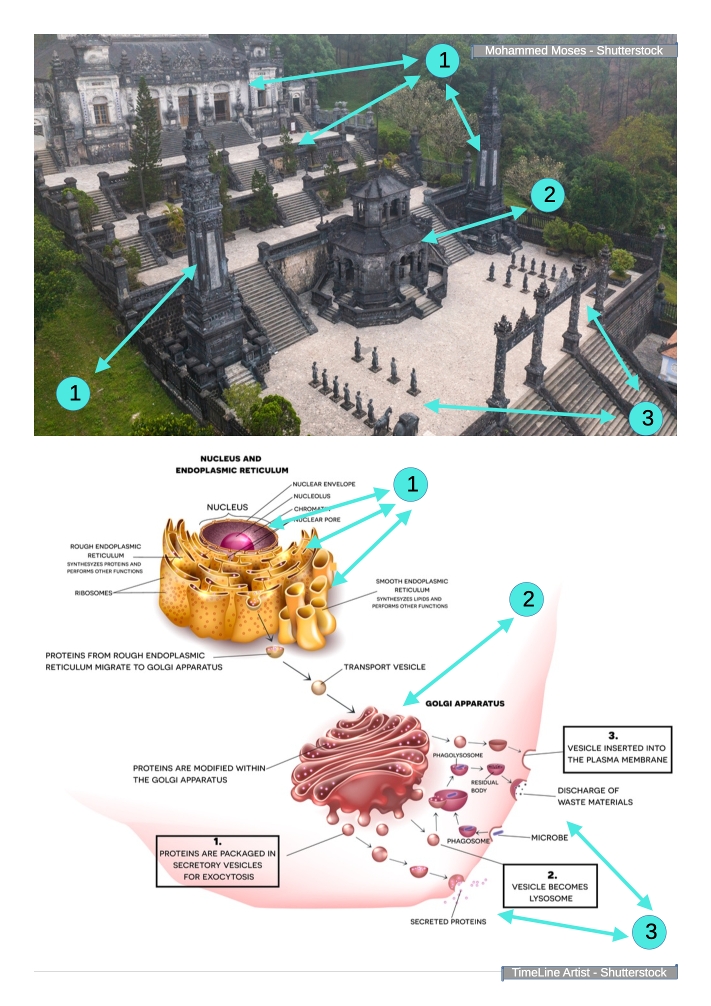
- 1. Golgi apparatus – The Golgi complex prepares proteins and lipid (fat) molecules for use elsewhere inside and outside the cell.
- 2. Transport Vesicle – Vesicles are small cellular containers. They perform a variety of functions, such as helping to transport materials that an organism needs to survive and recycle waste materials.
- 3. Secretory vesicle – Secretory vesicles play an important role in moving molecules outside of the cell, through a process called exocytosis. They are crucial for healthy organ and tissue function. For example, secretory vesicles in the stomach will transport protein-digesting enzymes to help break down food.
- Source. https://www.medicalnewstoday.com/articles/vesicle#types
, It seems that all figures play a role in the distribution of proteins from the Golgi apparatus. The elephants and horses on both sides are a symbol of transportation.
3. The Tomb vs structure of the cell, the front view.
photo description, HUE, VIETNAM – Khai Dinh king tomb. Imperial Royal Palace of Nguyen dynasty in Hue.
illustration description: Animal cell in section, multi-colored science biology. 3D rendering.
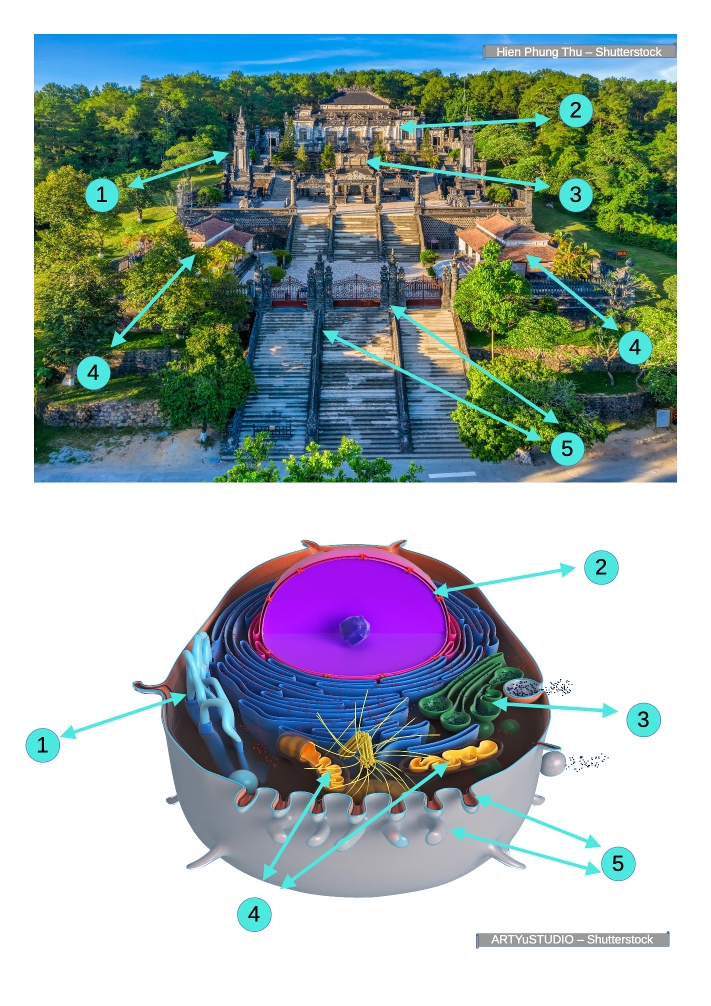
- 1. Smooth endoplasmic reticulum – Protein factory.
- 2. Nucleus – Is the control and monitoring center of a living cell.
- 3. Golgi – Protein Distribution, parts for Your Divine Body.
- 4. Mitochondria – The Power house and breathing system of Your Body.
- 5. Microvilli – Their purpose is to increase the surface area of the cell’s apical surface, resulting in more effective absorption or secretion of substances. Tourists entering or exiting through the gates play the role of transporting substances
- Source. https://en.wikipedia.org/wiki/Cell_(biology)
, I added these photos with a view from a different perspective so You don’t have any doubts.
4. The inside of the tomb vs nucleus looks like
photo description: HUE, VIETNAM – Interior ofTomb Khai Dinh. The tomb is blend of Western and Eastern architecture.
illustration description: Nucleus – 3d illustration.
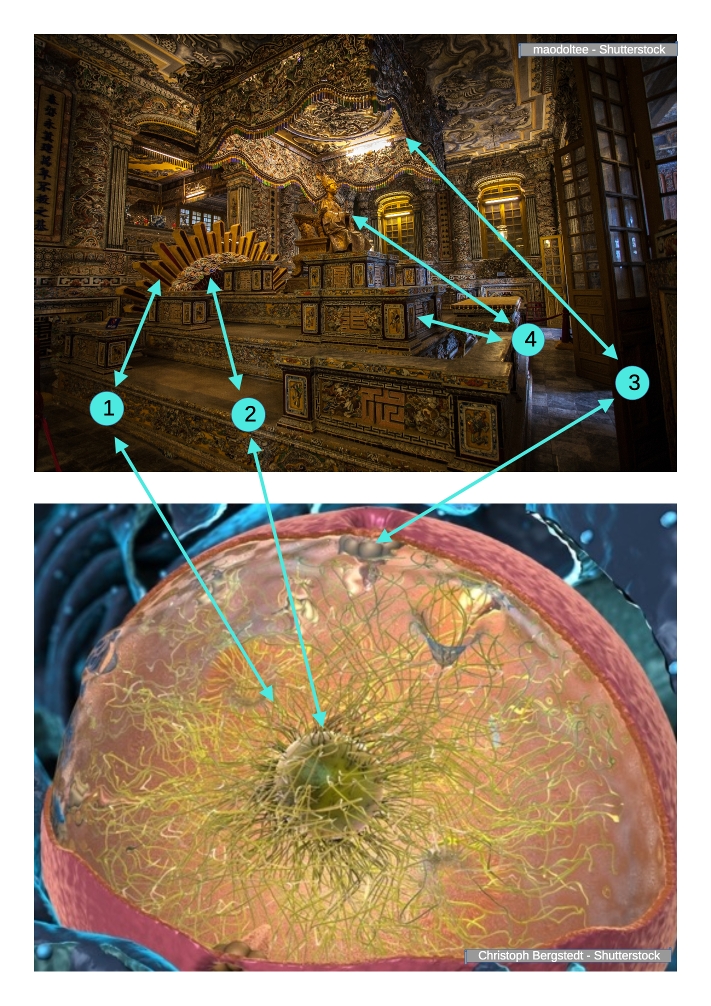
- 1. Chromatin – The main function of chromatin is to package DNA into a unit capable of fitting within the tight space of a nucleus.
- 2. Nucleolus – Is considered as the brain of the nucleus, covering nearly 25% volume of the nucleus. Primarily, it takes part in the production of subunits that unites to form ribosomes.
- 3. Nuclear pore – Is a large complex of proteins that allows small molecules and ions to freely pass, or diffuse, into or out of the nucleus.
- 4. Nuclear Body – In coordination with noncoding RNAs, chromatin modifiers and other machineries, various nuclear bodies have been shown to sequester and modify proteins, process RNAs and assemble ribonucleoprotein complexes, as well as epigenetically regulate gene expression. source. https://pmc.ncbi.nlm.nih.gov/articles/PMC3144265/
video – the Inner Life of the Cell Animation. Source. https://youtu.be/wJyUtbn0O5Y?si=RMv_Og_yGfj_tVQa
, This beautiful interior of the tomb of Khai Dinh is the interior of a Cell Nucleus. Do You know that everything I have show You here is within You ? You know You have trillions of them inside You and each of them works for the common good which is You. God loves You.
, Our forefathers were our masters of construction, they knew exactly how to realize God in architecture so that everyone could go inside to see the beauty of the inside of his Divine Body.
Tomasz Mikulski – Cell God
Combining images and analysis by Tomasz Mikulski – Cell God, date: 12/2024