1. The Ancient city vs Plant Cell.
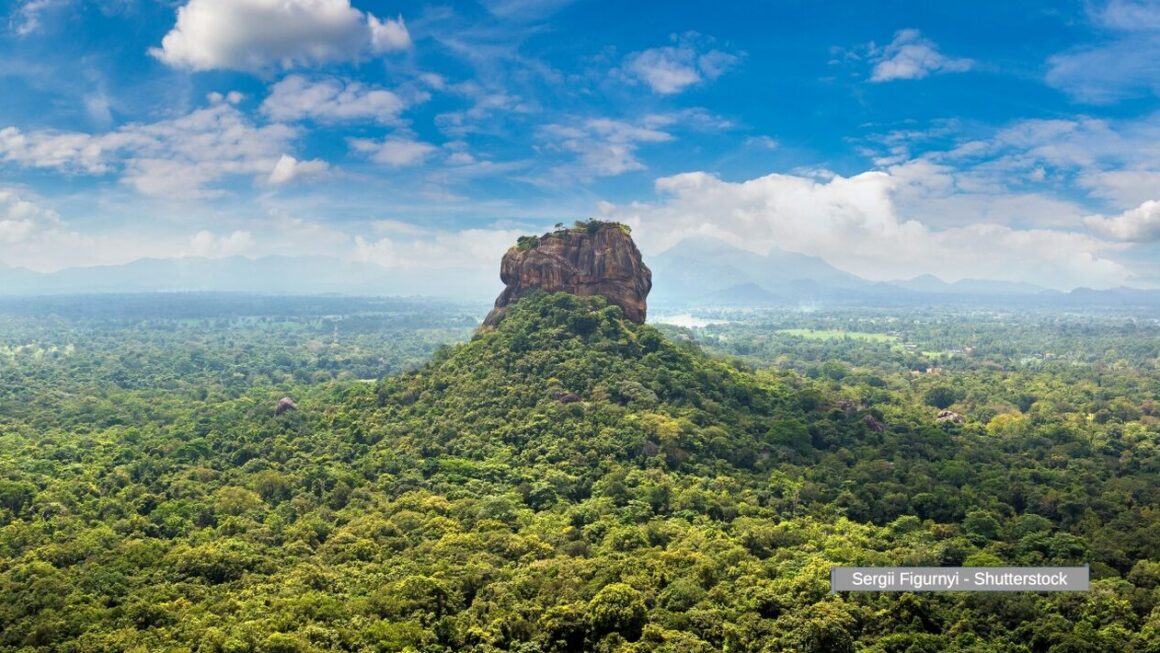
,Photo description: the amazing Lion Rock in Sigiriya, Sri Lanka. Aerial view of the tropical forest from the top.
,Vector description: Plant cell structure on white background – vector illustration.
, Sigiriya-A stone fortress that resembles a plant cell. Mount Sigiriya, also known as Lion Rock, is one of the most iconic places in Sri Lanka. Rising 200 meters above the surrounding jungle, this ancient fortress and royal palace amazes with its majesty and mystery. But have you ever wondered how Sigiriya can resemble a plant cell? Today we will look at this remarkable mountain through the prism of biology, discovering fascinating similarities between the architecture of nature, rock and cells.
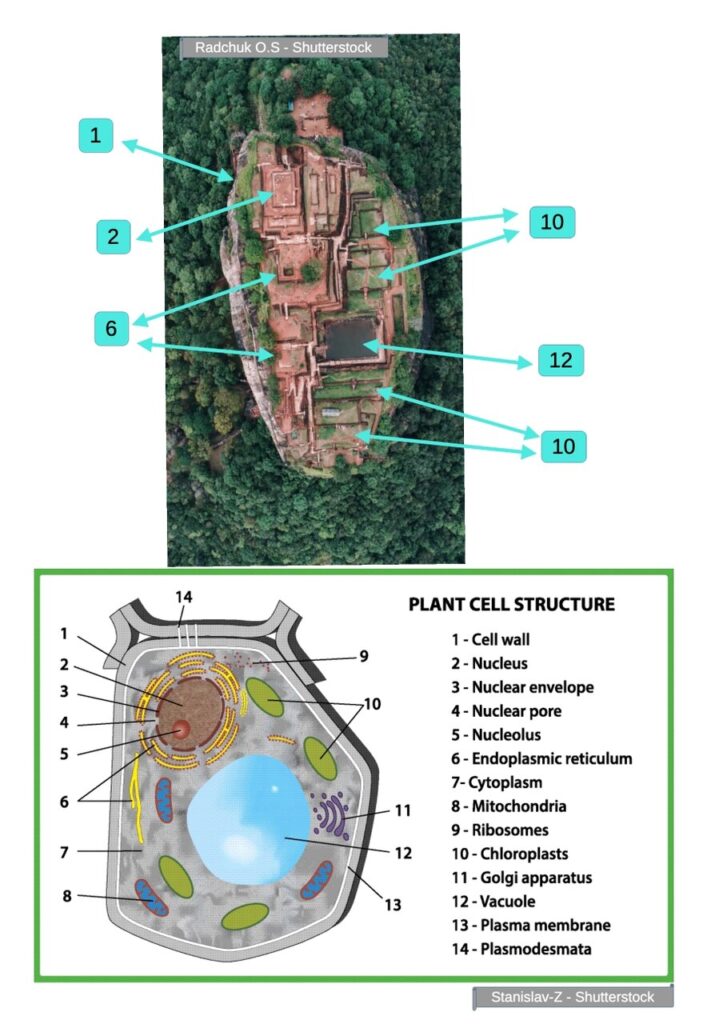
- 1. Cell wall – The rocky wall of Sigiriya – a powerful, vertical rock wall that protects the interior of the fortress, resembles a cell wall of plants. This wall gives structure and protects against external threats. In a plant cell, the cell wall is a rigid structure made of cellulose that gives the cell its shape and protects it from damage.
- 2. Nucleus – The top of the mountain-the cell nucleus. At the top of the mountain are the ruins of the palace, which was the center of power and control. It’s like the cell nucleus, which manages all the processes in the cell. In a plant cell, the nucleus stores DNA and controls gene expression, directing the functions of the cell.
- 6. Endoplasmic reticulum – the structures below the palace
- 10. Chloroplast – the water garden sections – The plastids, which can metamorphose into each other, exist in a splendid array of shapes and colors. The green plastids, which are known as chloroplasts, contain chlorophyll, which is responsible for the green color of many parts of plants. In higher plants, chloroplasts are typically ellipsoidal; in contrast, in the algae, they may appear as plates, stars, or spirals. The orange plastids, which are known as chromoplasts, contain carotenoids and are responsible for certain colors in flowers, fruits, the roots of carrots and sweet potatoes (Ipomoea batatas), and the stem tubers of yams (Solanum tuberosum). The translucent plastids also known as leucoplasts include the amyloplasts and the elaioplasts, in which starch and lipids, respectively, are stored. In higher plants, the plastids originate as small proplastids in the meristematic cells. The transformation of proplastids into chloroplasts in higher plants requires light. In the absence of light, the proplastids transform into etioplasts, which will rapidly become chloroplasts upon exposure to light.
- 12. Vacuole – the water tank, is a membrane-bound compartment in the cell that contains the cell sap. In meristematic cells, vacuoles are generally small and are characterized by contents that stain darkly with certain procedures. The contents of these vacuoles seem to be utilized in the process of development and then are replaced by water. At a certain stage in this process, the vacuoles fuse to form the large central vacuole, and most mature plant cells have large, centrally located vacuoles that make up the greatest part of the total volume of the cell. The cell sap is typically clear, making the vacuole look empty or vacuous. The increase in volume of this vacuole is important in the growth of the plant cell. Moreover, the presence of water in the vacuole allows plants to have a large open dendritic form with a minimum investment of energy-intensive compounds in order to help the plants acquire light and the necessary nutrients that are dilute in the environment. In plant cells, vacuoles of different sorts are known to have different origins, with the endoplasmic reticulum, the Golgi apparatus, and the plasma membrane being involved. source. https://www.accessscience.com/content/article/a522600
, Video YouTube, Sigiriya-An Ancient Celestial City Built Using Advanced Technology, https://youtu.be/XlE0i06i0w8?si=ZXMIiOuXRTUUJ373&t=1
, An ancient people built a city on a mountaintop in the image and appearance of a plant cell. Why? Because the system and functions of the cell implemented in the architecture of cities make them self-sufficient. The water tank (vacuole) supplies water to the garden sections (chloroplasts), ensuring crop growth. The rocky structure of the palace modeled on the nucleus and endoplasmic reticulum was used for habitation.
2. View from other perspective.
, Photo description: Aerial view from above of Sigiriya or the Lion Rock, an ancient fortress and a palace with gardens, pools, and terraces atop of granite rock in Dambulla, Sri Lanka. Surrounding jungles and landscape.
, Vector description: Green cell of the plant. Element of science and biology. Cartoon flat illustration. Microorganism by microscope. With core, details and membrane.
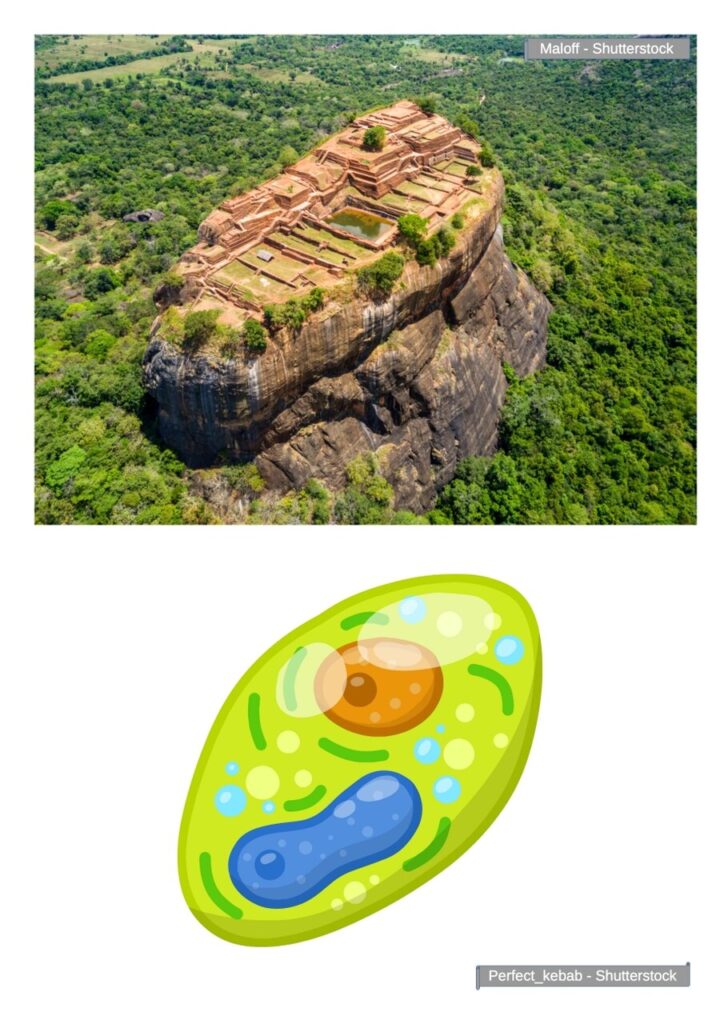
, Mount Sigiriya is not only an impressive structure, but also a living structure that resembles a plant cell in its complexity and harmony. Every element, from rock walls to water gardens, performs its function, creating something greater than the sum of the parts. Like the plant cell, Sigiriya is a symbol of life, growth and resilience. It is a place where nature and history intertwine in an extraordinary way, reminding us of the beauty and complexity of the world, both at the macro-and the micro-scale. If you liked this post, do not forget to comment and share. See you in the next entries!
Combining images and adding a description details made by Tomasz Mikulski – Cell God, date: 02/2025