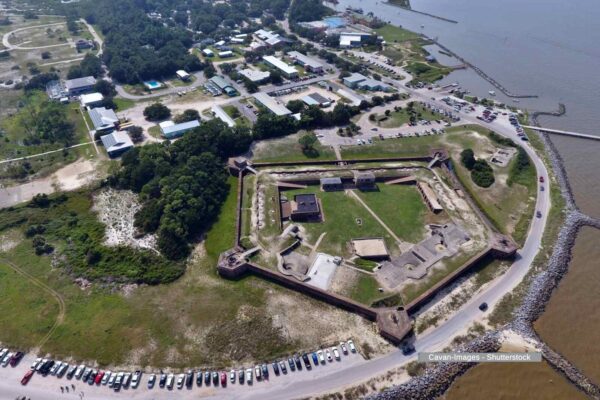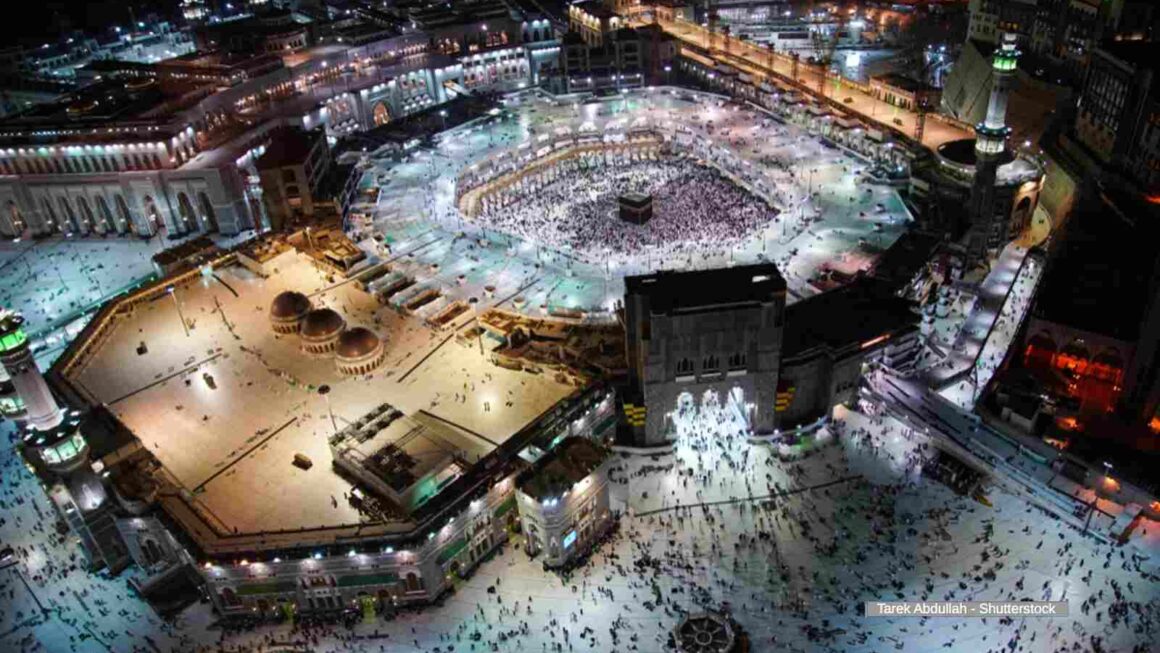
1. The Great Mosque vs animal Cell.
photo description: aerial view of Mecca – Saudi Arabia.
illustration description: animal cell and anatomy.
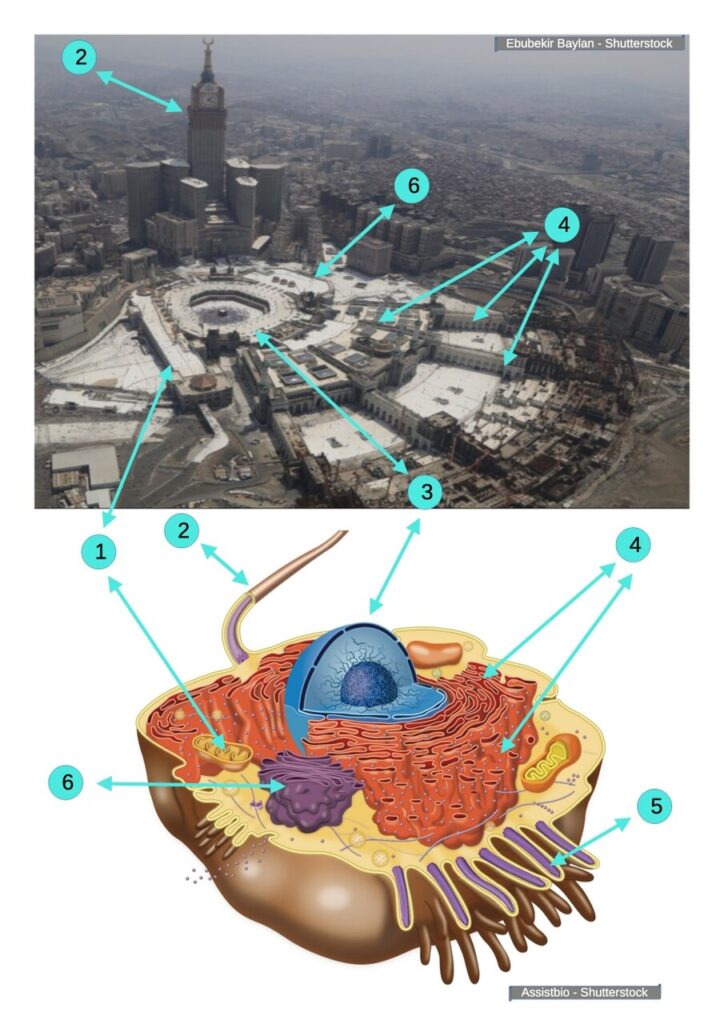
- 1. Mitochondria – The large, complex organelles in which aerobic cellular respiration occurs in eukaryotic cells are called mitochondria.
- 2. Flagellum – Some eukaryotic cells use flagella for locomotion; however, eukaryotic flagella are structurally distinct from those found in prokaryotic cells. Whereas the prokaryotic flagellum is a stiff, rotating structure, a eukaryotic flagellum is more like a flexible whip composed of nine parallel pairs of microtubules surrounding a central pair of microtubules.
- 3. Nucleus – is described in the next section.
- 4. Endoplasmic reticulum – The endoplasmic reticulum is an interconnected array of tubules and cisternae (flattened sacs) with a single lipid bilayer . The spaces inside of the cisternae are called lumen. There are two types of , rough endoplasmic reticulum and smooth endoplasmic reticulum.
- 5. Microvilli – Cilia (singular: cilium) are a similar external structure found in some eukaryotic cells. Unique to eukaryotes, cilia are shorter than flagella and often cover the entire surface of a cell.
- 6. Golgi – Enzymes in the Golgi apparatus modify lipids and proteins transported from the endoplasmic reticulum to the Golgi, often adding carbohydrate components to them, producing glycolipids, glycoproteins, or proteoglycans.
- source: https://psu.pb.unizin.org/microb201/chapter/unique-characteristics-of-eukaryotic-cells/
The most common types of animal cells are:
- Skin Cells – Melanocytes, keratinocytes, Merkel cells and Langerhans cells.
- Muscle Cells – Myocyte, Myosatellite cells, Tendon cells, Cardiac muscle cells.
- Blood Cells – Leukocytes, erythrocytes, platelet.
- Nerve Cells – Schwann cell, glial cells etc.
- Fat Cells – Adipocytes.
- source. https://www.aakash.ac.in/important-concepts/biology/animal-cell
Do You already know what great Mecca is ?
video YouTube – Mecca tour. https://youtu.be/k_clFvRu0cs?si=LBQVeSWbCM2k_–W
video YouTube – Cell structure. https://youtu.be/NwVcJ0juhs4?si=xWrEcmqHFJ5h68uI
2. The Kaaba vs Nucleus and Nucleolus.
photo description: View of Central Mecca in Saudi Arabia.
illustration description: Nucleus: Eukaryotic cell’s central organelle, enclosed by a double membrane, containing DNA in chromatin form, orchestrating essential genetic functions,nuclear pore,envelope, 2d graphic.
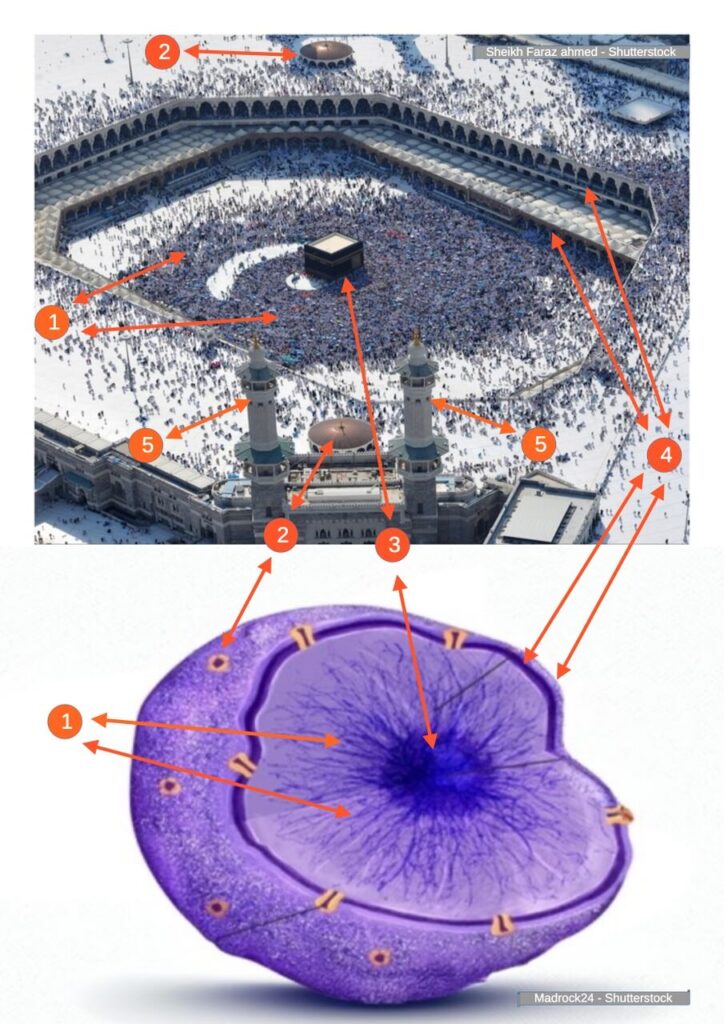
- Nucleus – The main structures making up the nucleus are the nuclear envelope a double membrane that encloses the entire organelle and isolates its contents from the cellular cytoplasm; and the nuclear matrix(The nuclear matrix is a nuclear compartment that has diverse functions in chromatin regulation and transcription), a network within the nucleus that adds mechanical support. The main function of the Cell Nucleus is to control gene expression and mediate the replication of DNA during the cell cycle….. Source. https://en.wikipedia.org/wiki/Cell_nucleus
- 1. Chromatin compartments – The interior of the eukaryotic cell nucleus has a crowded and heterogeneous environment packed with chromatin polymers, regulatory proteins, and RNA molecules. Chromatin polymer, assisted by epigenetic modifications, protein and RNA binders, forms multi-scale compartments which help regulate genes in response to cellular signals. Furthermore, chromatin compartments are dynamic and tend to evolve in size and composition in ways that are not fully understood…. Source. https://www.frontiersin.org/journals/molecular-biosciences/articles/10.3389/fmolb.2021.781981/full
- 2. Nuclear pore – The transport chanel. Is described in the 4th section.
- 3 .Nucleolus – is a dense region within the nucleus where ribosomal RNA (rRNA.) biosynthesis occurs. In addition, the nucleolus is also the site where assembly of ribosomes begins. Preribosomal complexes are assembled from rRNA. and proteins in the nucleolus; they are then transported out to the cytoplasm, where ribosome assembly is completed.
- 4. Nuclear double membrane – The nucleus is surrounded by a system of two concentric membranes, called the inner and outer nuclear membranes. The outer nuclear membrane is continuous with the endoplasmic reticulum, so the space between the inner and outer nuclear membranes is directly connected with the lumen of the endoplasmic reticulum.
- 5. Circular dorsal ruffles – sometimes known as dorsal ruffles or waves, are membrane protrusions composed of actin-rich structures and are formed on the apical surfaces of cells. Putative functions of circular dorsal ruffles can be broadly divided into two categories: internalization (of substrates, receptors, and membrane) and cell motility.. source. https://pmc.ncbi.nlm.nih.gov/articles/PMC3486146/
Pilgrims play a role in the processes of DNA replication, transcription and post-transcriptional processes taking place in Nucleus.
video YouTube – Cell Organelles 1 Nucleus, WEHImovies. https://youtu.be/KRkYOgbCyhE?si=okqOM3rnzaEPDPp-
3. The Multazam of Kaaba vs DNA replication.
photo description: MECCA, SAUDI ARABIA – JULY 14, 2018 : The door of the Kaaba called „Multazam” at Grant holy mosque Al-Haram in Mecca Saudi Arabia
illustration description: DNA replication.
photo description: Mecca, Saudi Arabia October-14-2019: The Holy Kaaba in Masjid Al Haram.
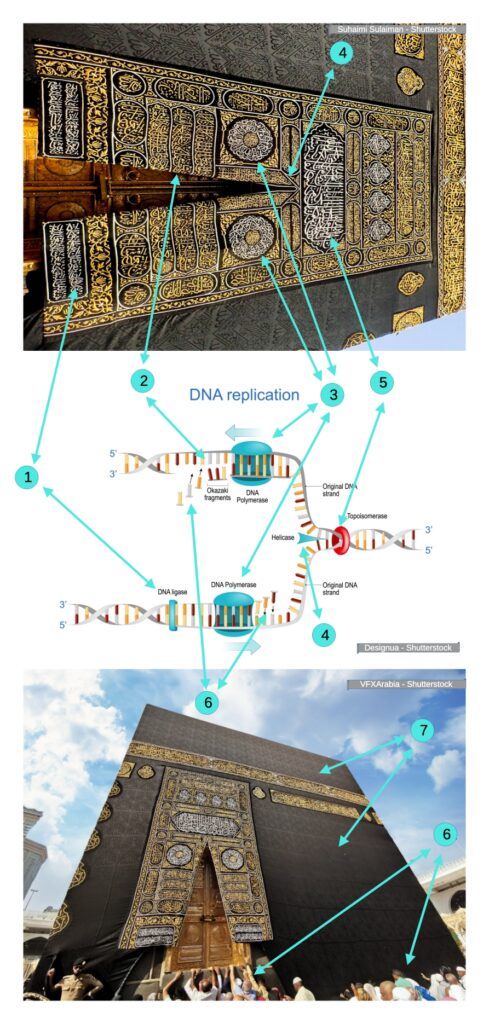
- DNA ligase – is a DNA-joining enzyme. If two pieces of DNA have matching ends, ligase can link them to form a single, unbroken molecule of DNA. source. https://www.khanacademy.org/science/biology/biotech-dna-technology/dna-cloning-tutorial/a/restriction-enzymes-dna-ligase
- Okazaki fragments – are small sections of DNA that are formed during discontinuous synthesis of the lagging strand during DNA replication… Source. https://study.com/academy/lesson/okazaki-fragments-definition-lesson-quiz.html
- DNA Polymerase – are enzymes that create DNA molecules by assembling nucleotides, the building blocks of DNA. These enzymes are essential to DNA replication and usually work in pairs to create two identical DNA strands from one original DNA molecule….. Source. https://www.news-medical.net/life-sciences/What-is-DNA-Polymerase.aspx
- Helicase – is defined as an enzyme that catalyzes the separation of double-stranded nucleic acids into single strands in an ATP-dependent reaction, playing a crucial role in various DNA-related processes such as replication, repair, and transcription…. Source. https://www.sciencedirect.com/topics/neuroscience/helicase
- Topoisomerase – The enzyme topoisomerase is responsible for preventing DNA from getting tangled, as well as relieving pressure in supercoiled DNA during DNA replication. DNA is supercoiled to help package it into a chromosome… Source. https://study.com/academy/lesson/topoisomerase-definition-function.html
- Free Nucleotides – Pilgrims play the role of free nucleotides. Free floating nucleotides are attracted to the exposed bases and bond to them via complementary base pairing (adenine-thymine and guanine-cytosine)…. Source. https://www.mytutor.co.uk/answers/18515/A-Level/Biology/Describe-the-process-of-eukaryotic-DNA-replication/
- Kiswa – The perinucleolar chromatin – representing the chromatin touching the nucleolar periphery is important for structure and function of the nucleolus itself as well as for the organization of the genome (Manuelidis and Borden 1988). The perinucleolar chromatin consists of both eu- and heterochromatin stretches. source. https://pmc.ncbi.nlm.nih.gov/articles/PMC6096769/
Keep in mind that here I am present You the replication of the DNA on the outer part of the Kaaba – Nucleolus.
The replisome is a complex molecular machine that carries out replication of DNA. The replisome first unwinds double stranded DNA into two single strands. For each of the resulting single strands, a new complementary sequence of DNA is synthesized. source. https://en.wikipedia.org/wiki/Replisome
4. The Mecca vs Nuclear pore complexes inside and outside the nuclear membrane.
photo description: MECCA, SAUDI ARABIA – MAY 02 2018: View on central Mecca square near Masjid Al Haram mosque from balcony at restaurant on top of Clock Tower or Abraj Al Bait. Crowd of people walking, daylight.
illustration description: Nuclear pore complex is an arrangement of proteins in the nuclear envelope. They selectively regulate the passage of molecules into the nucleus from the the cytoplasm and vice versa.
photo description: Mecca , Saudi Arabia 12 May 2021 , Makkah – Al Haram mosque from inside.
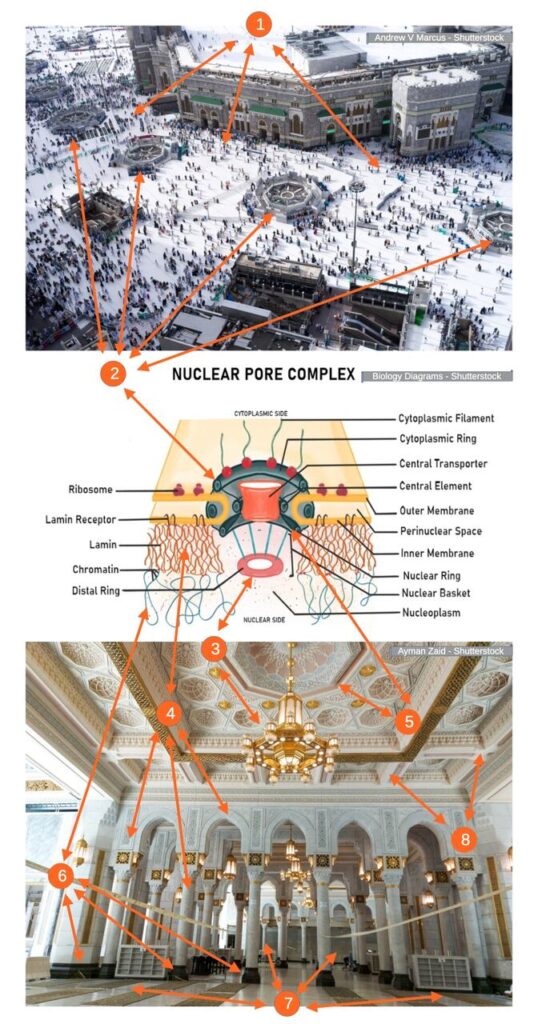
- 1. Cytoplasmic side and outer membrane – In eukaryotic cells, which have a nucleus, the cytoplasm is everything between the plasma membrane and the nuclear envelope. In prokaryotes, which lack a nucleus, cytoplasm simply means everything found inside the plasma membrane…. Source. https://www.khanacademy.org/science/biology/structure-of-a-cell/prokaryotic-and-eukaryotic-cells/a/plasma-membrane-and-cytoplasm
- 2. Cytoplasmic ring – Nuclear pore complex (NPC) is a biomolecular “nanomachine” that controls nucleocytoplasmic transport in eukaryotic cells. The key component of the functional architecture of the NPC is the assembly of intrinsically disordered proteins that line its passageway and play a central role in the NPC transport mechanism….. Source. https://www.sciencedirect.com/topics/immunology-and-microbiology/nuclear-pore-complex
- 3. Distal ring – is located on the outer side of the nuclear membrane.
- 4. Lamin – Lamins interact with a wide range of nuclear proteins and are involved in numerous nuclear and cellular functions. Within the nucleus, they play roles in chromatin organization and gene regulation, nuclear shape, size, and mechanics, and the organization and anchorage of nuclear pore complexes….. Source. https://pmc.ncbi.nlm.nih.gov/articles/PMC8810204/
- 5. Nuclear ring – is located on the inner side of the nuclear membrane.
- 6. Heterochromatin – is the darkly stained and highly condensed region of chromatin fibre and is present only at certain places in the chromatin structure. It is the transcriptionally inactive chromatin as it cannot be transcribed to form a mRNA. source. https://byjus.com/question-answer/which-is-the-transcriptionally-inactive-chromatin/
- 7. Nuclear side – The nuclear envelope has a complex structure, consisting of two nuclear membranes, an underlying nuclear lamina, and nuclear pore complexes (Figure 8.1). The nucleus is surrounded by a system of two concentric membranes, called the inner and outer nuclear membranes…. Source. https://www.ncbi.nlm.nih.gov/books/NBK9927/
- 8. Inner membrane –
video YouTube – The Structure of the Nuclear Pore Complex (An Update): Supplemental Video 1. https://www.youtube.com/watch?v=OIMhjTJHl8Q
If You wonder how it is possible that such temples are built in such detail, well in my opinion they are modeled on the cell structure. And as You can see in these pictures they are in line with the cell parts.
5. Quran Gate vs Acrocentric Chromosome.
photo description: Mecca, Saudi Arabia Mars 30 2024 : Quran Gate , gateway to Makkah on Makkah Jeddah Highway.
vector description: Biological illustration of acrocentric chromosome.
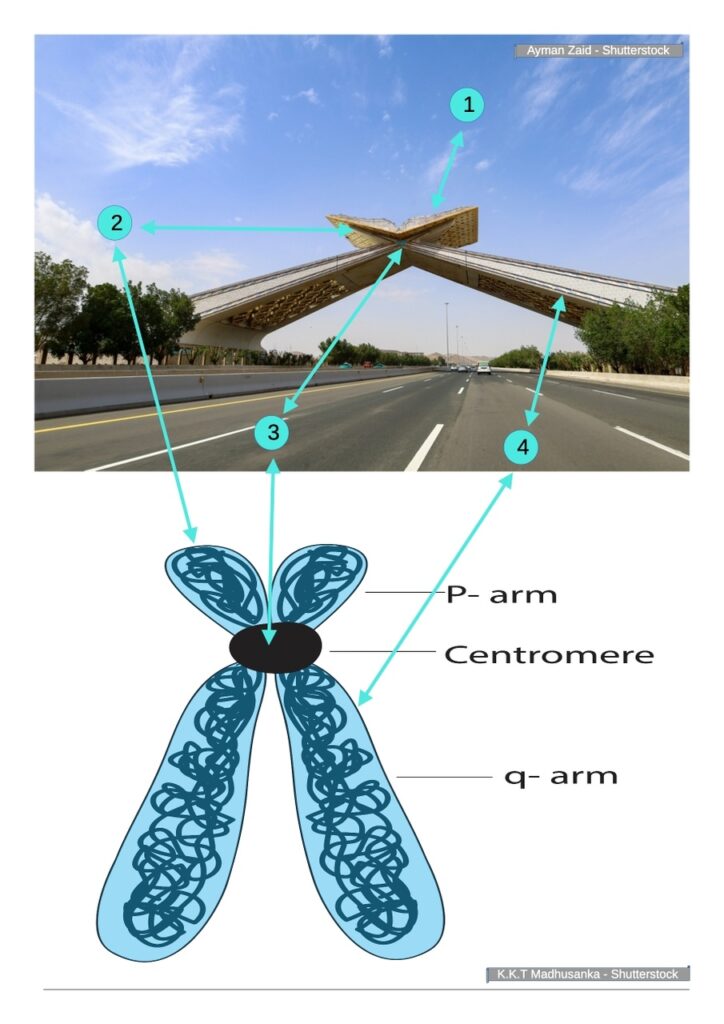
- A chromosome is a package of DNA containing part or all of the genetic material of an organism. In most chromosomes, the very long thin DNA fibers are coated with nucleosome-forming packaging proteins; in eukaryotic cells, the most important of these proteins are the histones. source. https://en.wikipedia.org/wiki/Chromosome
- An acrocentric chromosome is a chromosome whose centromere is subterminal. The centromere is closer to the end rather than the center. It should not be confused with subtelocentric chromosome wherein the centromere is comparatively nearer to the end than that of the centromere of an acrocentric chromosome. In humans, chromosome 13, chromosome 14, chromosome 15, chromosome 21, chromosome 22, and Y chromosome are acrocentric. source. https://www.biologyonline.com/dictionary/acrocentric-chromosome
- 1. Quran as knowledge about Our GENES EXPRESSION Is described in the next section.
- 2. P-arm – The p-arms of the five human acrocentric chromosomes bear nucleolar organizer regions (NORs) comprising ribosomal gene (rDNA) repeats that are organized in a homogeneous tandem array and transcribed in a telomere-to-centromere direction….. Source. https://pubmed.ncbi.nlm.nih.gov/36854315/
- 3. Centromere – The centromere appears as a constricted region of a chromosome and plays a key role in helping the cell divide up its DNA during division (mitosis and meiosis). Specifically, it is the region where the cell’s spindle fibers attach…. Source. https://www.genome.gov/genetics-glossary/Centromere
- 4. Q-arm – The q arm is the longest arm. It can be large in comparison to the other arm – the p arm – or it can be similar size or any size in between. Naming the arms of the chromosomes is of benefit when noting the locations of a gene within the genome or the location of a variant associated with a condition…. Source. https://www.genomicseducation.hee.nhs.uk/glossary/q-arm/
video YouTube – How DNA is Packaged (Advanced) https://youtu.be/gbSIBhFwQ4s?si=95EUC92X1E3JiZyU
See how the Quran Gate structure looks like at night. Pay attention to its internal appearance, in my opinion it resembles the interior of a chromosome, packed DNA in form of histon’s proteins. source. https://www.flickr.com/photos/clivechanel/19506415565
6. Quran with Muslim prayer beads vs Genes Expression
photo description: Belitung, June 18, 2024 : Islamic Concept, Ramadhan and Eid Fitr. Flat lay composition with Muslim prayer beads, Al Quran on isolated white background.
vector description: Protein synthesis in vector file.
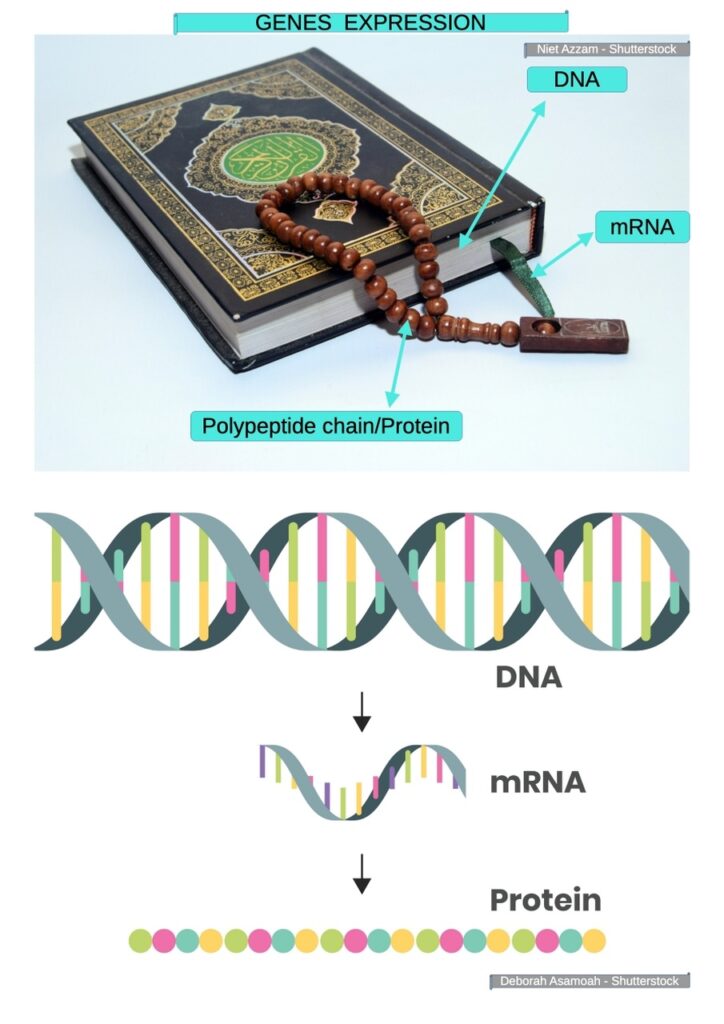
- Genes expression – is the process by which the information encoded in a gene is turned into a function. This mostly occurs via the transcription of RNA molecules that code for proteins or non-coding RNA molecules that serve other functions. Gene expression be thought of as an “on/off switch” to control when and where RNA molecules and proteins are made and as a “volume control” to determine how much of those products are made. The process of gene expression is carefully regulated, changing substantially under different conditions and cell types. The RNA and protein products of many genes serve to regulate the expression of other genes…… Source. https://www.genome.gov/genetics-glossary/Gene-Expression
- DNA – Quran – Science, instruction and information about GENE EXPRESSION. Our DNA carries the genetic instructions our cells need to make proteins. This is the process by which the information contained in genes is decoded, read and translated-thanks to which various products are created, mainly proteins, and forms of RNA.
- mRNA – Transcription is the process by which the information in a strand of DNA is copied into a new molecule of messenger RNA (mRNA)…. Source. https://www.quora.com/What-is-the-process-called-when-mRNA-copies-DNA
- Polypeptide chain – many proteins – The definition of a polypeptide chain is a string of amino acids connected together by peptide bonds. The word poly means many, and the word peptide refers to proteins. So, a polypeptide chain is a chain of the building blocks of proteins or amino acids. Polypeptide chains are important because they make up proteins….. Source. https://study.com/academy/lesson/polypeptide-chain-definition-structure-synthesis.html
video YouTube – Gene expression, „From DNA to protein – 3D”. https://youtu.be/gG7uCskUOrA?si=txEci6W77SMNq550&t=1
Prayer beads in Muslim, Christian and others culture resemble a polypeptide chain in appearance. By praying to God, you receive his love in the form of manufactured proteins, the parts needed for Your Divine Body.
,I want You to know that Your body is the Temple of God, You have God in You, God loves You every second of Your life, He serves You from the beginning to the end of Your days.
I have shown You in a few examples what Great Mecca is. There is still much to explain and show here, so this post will be continued. At the end of this post I ask You a riddle question, who do You think Allah and Jesus is when looking through genes expression ? tip, They are shown here in one of the pictures.
,Combining images and analysis by Tomasz Mikulski – Cell God, date: 01/2025
more about Mecca, source. https://en.wikipedia.org/wiki/Mecca