
───────── ✦ ─────────
V O I C E S O F T H E G E N O M E
A series on CellGod.live
───────── ✦ ─────────
[„Forgiveness is not forgetting. It is opening your hand and letting the weight fall to the ground. Grain by grain. Step by step.”
New Africa – Shutterstock]
───────── ✦ ─────────
The Quote
St. Gabriel Urgebadze (1929–1995) — a Georgian Orthodox monk, ascetic, confessor, and Fool for Christ. As a child in communist Georgia, he found faith on his own. In 1965, during a Soviet May Day parade, he set fire to a large portrait of Lenin, shouting to the crowd: „Why are you bowing down before idols? Glory is due not to this corpse but to Jesus Christ!” He was beaten by the mob — 18 broken bones, a psychiatric hospital, a death sentence. He spent the rest of his life at the Samtavro Monastery in Mtskheta. Canonized in 2012.

He said:
„If they have insulted you, repaid good with evil, do not hold evil in your heart, forgive, and rejoice, because thanks to this, you have moved a few steps closer to God.”
— St. Gabriel Urgebadze
Let us read these words on three levels.
───────── ✦ ─────────
Decoding
1. „If they have insulted you, repaid good with evil”
Instruction: Gabriel is not talking about abstract harm. He is talking about a specific situation: you gave someone good, and you received evil in return. You helped, and someone betrayed you. You trusted, and someone exploited that trust.
Experience: You know this. Everyone does. You help a colleague at work — and he goes to the boss and takes credit for your effort. You lend money to a friend — and he stops answering the phone. You give someone your time, your energy, your heart — and that person turns away from you without a word.
This is one of the most painful experiences — because it strikes not only the body but your trust. Your sense of justice. Your belief that good has meaning.
Mechanism: At the molecular level, this is an attack. A harmful signal from outside that triggers a stress response in your body. Cortisol — the stress hormone — spikes. Pro-inflammatory cytokines activate — IL-6, TNF-α, CRP. The body shifts into threat mode: accelerated heart rate, muscle tension, disrupted sleep.
This is a normal, healthy, acute response. The body is doing exactly what it should — mobilizing against a threat.
The problem begins in the next step.
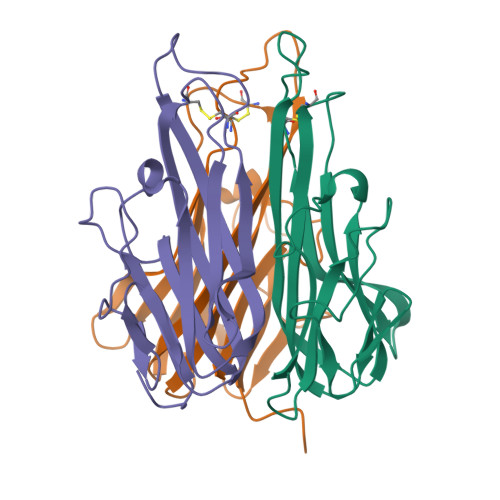
[ ILLUSTRATION — TNF-α, PDB: 1TNF ]
TNF-α (Tumor Necrosis Factor alpha) — a pro-inflammatory cytokine. Three subunits forming a trimer. This is the molecule that circulates in your blood when you hold evil in your heart. The longer you carry the resentment — the more of it you produce. Structure: PDB 1TNF.
2. „Do not hold evil in your heart”
Instruction: Let go. Do not nurture the resentment. Do not return to it over and over. Do not replay that conversation, that scene, that moment in your head. Let it go.
Experience: And this is the hardest part. Because the body does not want to let go. The mind replays the scene — over and over. You wake up at night thinking about it. In the shower you have a conversation in your head that you will never have in real life. You feel tension in your jaw, your shoulders, your stomach. You feel something eating you from the inside.
And you are right — something is eating you from the inside. Literally.
Mechanism: „Holding evil in your heart” is maintaining an inflammatory state after the threat has passed.
An acute inflammatory response is healthy — it activates, does its job, and shuts down. Like a fever during an infection: it arrives, fights the virus, and leaves.
But when you hold evil in your heart — when you return to the injury in your mind, relive it again and again, plan revenge — your body does not know that the threat has passed. For the body, the memory of the injury is just as real as the injury itself. Cortisol stays elevated. Pro-inflammatory cytokines circulate. The inflammation does not subside.
It becomes chronic.
───────── ✦ ─────────
What does it mean to hold evil in your heart?
Picture it through simple examples:
A wound that heals. You cut your finger — the body launches an inflammatory response: redness, swelling, pain. This is normal. After a few days, the inflammation subsides, the wound closes, the skin rebuilds. The system did its job and shut down.
A wound you will not let heal. But imagine that every day you tear off the scab. The wound cannot close. The inflammation persists for weeks. The tissue cannot regenerate because it is constantly irritated. The body spends energy on fighting instead of repairing.
This is holding evil in your heart. Tearing off the scab of an emotional wound every single day.
The person who cannot sleep. He lies awake at night replaying an argument from a week ago. A month ago. Years ago. Nothing is happening on the outside — but inside his body, a war is raging. Cortisol elevated. Sleep disrupted. Regeneration blocked.
The worker who carries a grudge against his boss. For a year, he goes to work with clenched teeth. The boss passed him over for a promotion. He remembers every detail. He does not talk about it, but he carries it. His blood pressure rises. Headaches return. His stomach acts up. The doctor finds no cause — because the cause is not in an organ. It is in the chromatin.
In every one of these examples, the same pattern: the body maintains an inflammatory response that should have ended long ago.
Gabriel says: do not do this. Let go. Not because the other person deserves it. Because holding it inside destroys you.
───────── ✦ ─────────
What is forgiveness?
Forgiveness is one of the most misunderstood words.
Forgiveness does not mean: „what you did to me was fine.” It does not mean forgetting. It does not mean you have to trust that person again. It does not mean weakness.
Forgiveness means: „I choose not to carry this weight.”
Think about it this way:
A ledger you close. A good accountant does not pretend the loss did not happen. He records it — precisely, to the last penny. The loss is documented. But then he closes the balance sheet and opens a new year. He does not carry the same loss into every subsequent day. Forgiveness is not erasing the entry. It is closing the ledger. The injury stays in the archive — it stops being in your pocket.
A border after signing a peace treaty. Two nations end a war. They sign a peace — but the border remains. The checkpoints remain. No one says: „since it is peace, we take down the fence.” Peace means: we stop shooting, we rebuild cities, we return to life. It does not mean: we pretend the war never happened, or we remove the safeguards. Forgiveness is signing the peace. Trust is a separate treaty — it may be signed one day, it may never be. One does not require the other.
A macrophage that changes mode. And once again — an example from inside your own body, literal. The same macrophage that was fighting receives a signal: threat over. It does not move somewhere else. It does not stop existing. It changes its program: from combat mode (M1) it shifts to repair mode (M2) and begins rebuilding the tissue it was just defending. The same cell. The same place. A different order. Forgiveness is exactly this: not fleeing the battlefield, but changing the order on the same field. The chromatin that was closed during the fight opens up for repair genes.
In every one of these examples, the same pattern: a decision to end a process that should have already ended — without denying that it ever began.
───────── ✦ ─────────
When forgiveness seems impossible
I need to be honest.
Everything I wrote above — the ledger, the peace treaty, the macrophage — concerns everyday injuries. Betrayals, injustices, lies. Situations that hurt, but that you can fit inside your head.
But there are injuries that do not fit.
A mother whose child was murdered before her eyes. A woman who survived rape during a war. A man who returns home to find there is no home — because the entire village was burned with the people inside it. Entire nations that lost generations to genocide.
I am not going to write to these people „forgive and rejoice.” This is not a post that tells victims of atrocities what to feel. No one has that right.
What I can say — honestly, based on what I know about biology — is one thing:
Inflammation does not ask whether you are right.
A mother who carries hatred for the murderer of her child has every right to it. Every court in the world would affirm that right. But her body does not know the concept of „righteous hatred.” Her body knows only inflammation — and it maintains it for as long as the emotion lasts. Not because she is weak. Because that is how biology works.
Forgiveness in the case of such crimes — if it ever comes at all — is not a decision of a single day. It is not an act of will. It is a process that can take years. Sometimes a lifetime. And sometimes it never comes — and that, too, is human.
But there are people who went through the worst and forgave. Not all of them. Not right away. Not easily. But those who did describe the same moment: they did not forgive for the sake of the perpetrator. They forgave because holding it inside was killing them slowly — and they chose life.
Immaculée Ilibagiza survived the genocide in Rwanda. She hid for 91 days in a bathroom with seven other women while her family was being murdered outside. After the war, she stood face to face with the man who killed her brother. And she forgave. She later wrote: „Forgiveness is not a gift for the other person. It is a gift for yourself.”
I am not writing this to lecture anyone. I am writing it to be honest: Gabriel speaks of moving a few steps closer to God. Not one leap. Not one act. Steps. For someone who has lost everything, a single step may take ten years. And that is all right.
Biology does not demand forgiveness immediately. Chromatin does not close forever. As long as you are alive — the path is open. Even if you walk it very, very slowly.
───────── ✦ ─────────
Now — the mechanism
Gabriel says: „do not hold evil in your heart, forgive.” Molecular biology says: „shut down the chronic inflammatory state and shift from combat mode to repair mode.”
Combat mode (holding evil):
Cortisol elevated. Pro-inflammatory cytokines active. Chromatin closed — repair genes silenced. The body spends energy defending against a threat that no longer exists. The body wears itself out instead of regenerating.
[ ILLUSTRATION — Glucocorticoid receptor with cortisol, PDB: 4P6X ]
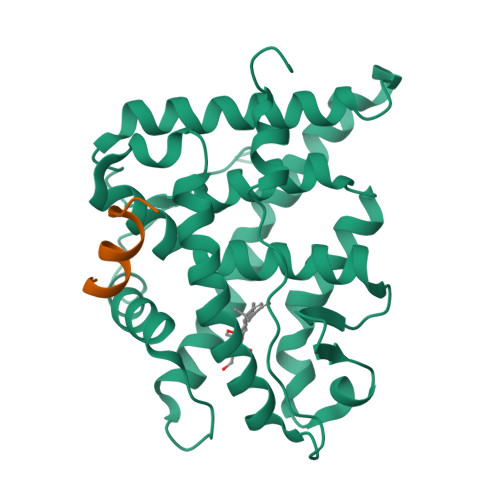
Glucocorticoid receptor with cortisol (yellow molecule) in the binding pocket. This is what stress looks like at the atomic level — the stress hormone enters the receptor and changes gene expression. When you do not forgive, this image repeats in your cells day after day. Structure: PDB 4P6X.
Repair mode (forgiveness):
Cortisol drops. The parasympathetic nervous system activates — the one that tells the body: „the threat is over, you can repair.” Chromatin opens. Repair, regenerative, and anti-inflammatory genes return to expression. The genome is heard again.
Remember the first entry in this series? Humility = euchromatin. Openness to what is within you. Forgiveness is an act of humility — relinquishing the right to revenge, opening up to something greater than your own hurt.
And the molecular effect is the same: opening of chromatin.
Holding evil = heterochromatin. The genome is still in the cell — but it is silenced. Closed. Unheard.
Forgiveness = euchromatin. The genome speaks. The cell hears.
Gabriel does not say „forgive because it is proper.” He says: „forgive because it brings you closer to God.” At the molecular level: forgive because it opens your genome.
───────── ✦ ─────────
„Rejoice, because you have moved a few steps closer to God”
Instruction: Do not only forgive — rejoice in it. Every act of forgiveness is a step closer. Not a loss — a gain.
Experience: This is counterintuitive. Someone harmed you, and you are supposed to be glad about it? Yes — but not about what was done to you. About what you did with that situation. You let go. You did not let it destroy you. You chose repair over revenge. And you felt the effect — relief, peace, a deeper breath.
Mechanism: „Joy” after forgiveness is not an abstraction. It is neurochemistry.
When the body shifts from inflammatory mode to repair mode, it releases endorphins, oxytocin, and serotonin. The body rewards you for resolving the conflict. It is a biological signal: „well done, you are safe, you can regenerate.”
[ ILLUSTRATION — Serotonin receptor, PDB: 7E2Y ]
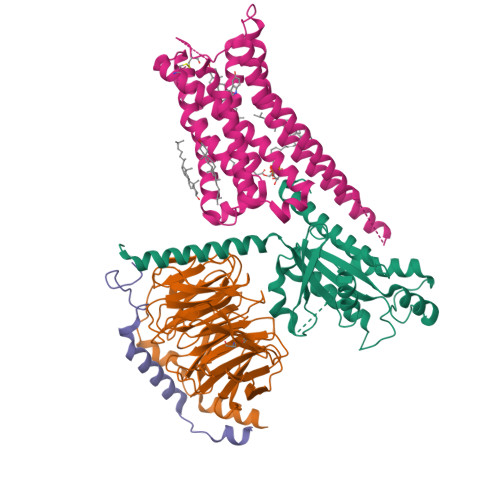
Serotonin receptor — the site where serotonin, the molecule of peace and reward, binds. When you forgive and the body shifts into repair mode, this receptor begins to work. This is the biology of joy that Gabriel speaks of. Structure: PDB 7E2Y.
„A few steps closer to God” = your chromatin has opened a little more. The genome is a little more audible. Not all at once. Not in a single act. Step by step.
Gabriel does not promise instant enlightenment. He says: a few steps. This is epigenetics in its purest form — small, cumulative changes in chromatin that, over time, reshape entire patterns of gene expression. One histone modification here, one demethylation there. Step by step. Forgiveness by forgiveness.
Every act of forgiveness is a small step. Every step opens chromatin. Every opening brings you closer to your genome.
───────── ✦ ─────────
Divine Facts
1. Research published in Biological Psychology (Tabak et al., 2011) showed that individuals who forgave their offenders had measurably lower cortisol levels than those who maintained resentment. Forgiveness literally lowers the stress hormone in your blood.
2. Chronic inflammation — the molecular equivalent of „holding evil in your heart” — is linked to cardiovascular disease, type 2 diabetes, depression, autoimmune disorders, and cancer. One word from Gabriel — „forgive” — is a preventive health instruction covering the majority of diseases of civilization.
3. Research from Psychology & Health (Worthington & Scherer, 2004) describes forgiveness as „an emotion-focused coping strategy that can reduce health risks and promote health resilience.” Not a pious wish — a scientific survival strategy.
4. The parasympathetic nervous system — activated by forgiveness and letting go — is called the „rest and digest” system. It is the opposite of the fight-or-flight response. Its activation lowers heart rate, dilates blood vessels, stimulates digestion, and — crucially — opens chromatin to regenerative genes.
5. The word „forgiveness” appears in the Bible over 100 times. Jesus speaks of forgiving „seventy-seven times” (Matthew 18:22). In epigenetics: cumulative, repeated changes — time after time, step by step — build lasting chromatin patterns. Seventy-seven times is not hyperbole. It is an epigenetic protocol.
───────── ✦ ─────────
The Monk Who Wrote a Prescription
St. Gabriel Urgebadze never studied immunology. He never heard the words „cortisol,” „cytokines,” „chromatin,” or „epigenetics.”
He was a Georgian boy who found God on his own in a communist state. He built miniature churches as a child. He burned a portrait of Lenin as a priest. He lived in an abandoned chicken coop as a monk.
But he gave people a prescription that modern science confirms with precision:
Do not hold evil in your heart. Shut down the chronic inflammation.
Forgive. Open your chromatin. Let your genome speak.
Rejoice. Your body will reward you — with endorphins, oxytocin, and peace.
A few steps closer to God. A few histone modifications closer to your genome.
One sentence from a monk in a Georgian monastery. All of behavioural epigenetics in a single paragraph.
He knew.
───────── ✦ ─────────
Voices of the Genome — Part 2
Analysis and concept: Tomasz Mikulski — CellGod.live
September 2026
„Your body is a temple of God” — 1 Corinthians 3:16
───────── ✦ ─────────
Sources
Quote:
YouTube channel „Echo Bizancjum” — youtube.com/@EchoBizancjum
Life of St. Gabriel:
orthochristian.com — „A Living and Miraculous Great Love of the Twentieth Century”
Gabriel Urgebadze https://en.wikipedia.org/wiki/Gabriel_Urgebadze
Scripture:
1 Corinthians 3:16 — „Do you not know that you are a temple of God, and the Spirit of God dwells in you?”
Matthew 18:22 — „I do not say to you seven times, but seventy-seven times.”
Testimony:
Immaculée Ilibagiza, „Left to Tell: Discovering God Amidst the Rwandan Holocaust”, Hay House, 2006
Scientific literature:
Tabak B.A. et al., „Perceived agreeableness decreases cortisol response and increases forgiveness following recent interpersonal transgressions”, Biological Psychology, 2011
Worthington E.L. Jr., Scherer M., „Forgiveness is an emotion-focused coping strategy that can reduce health risks and promote health resilience”, Psychology & Health, 2004; 19(3):385–405
Saban K.L. et al., „Impact of a Mindfulness-Based Stress Reduction Program on Psychological Well-Being, Cortisol, and Inflammation in Women Veterans”, Journal of General Internal Medicine, 2022
Slavich G.M., Irwin M.R., „From Stress to Inflammation and Major Depressive Disorder: A Social Signal Transduction Theory of Depression”, Psychological Bulletin, 2014; 140(3):774–815