„The Ring Fortress of Eketorp and the Cellular Blueprint”
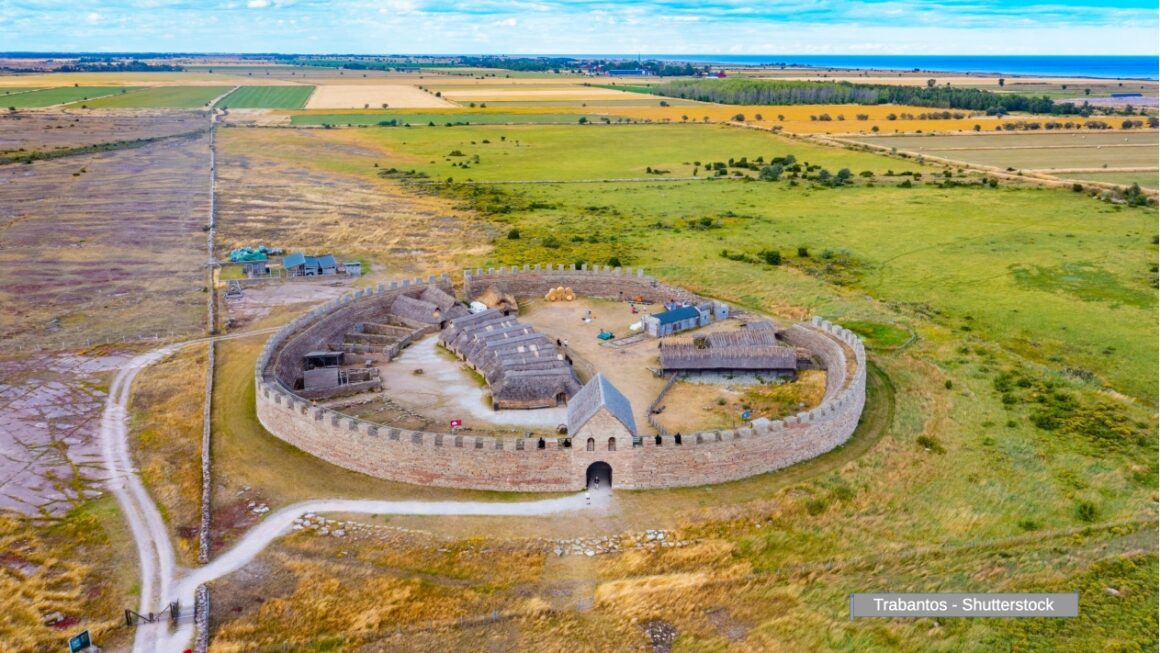
, Photo description: Panorama of Eketorp ring fortress in Sweden.
, Illustration description: 3D illustration of a human or animal cell in cross section.
, In the heart of Öland, Sweden, lies the ancient ring fortress of Eketorp, a structure that has stood the test of time, not only as a testament to human ingenuity but also as a profound architectural metaphor for the divine. As we delve deeper into our series, „The Face of God in Architecture,” we explore the striking parallels between the layout of Eketorp and the intricate design of a cell, revealing a divine blueprint that our ancestors might have intuitively understood.
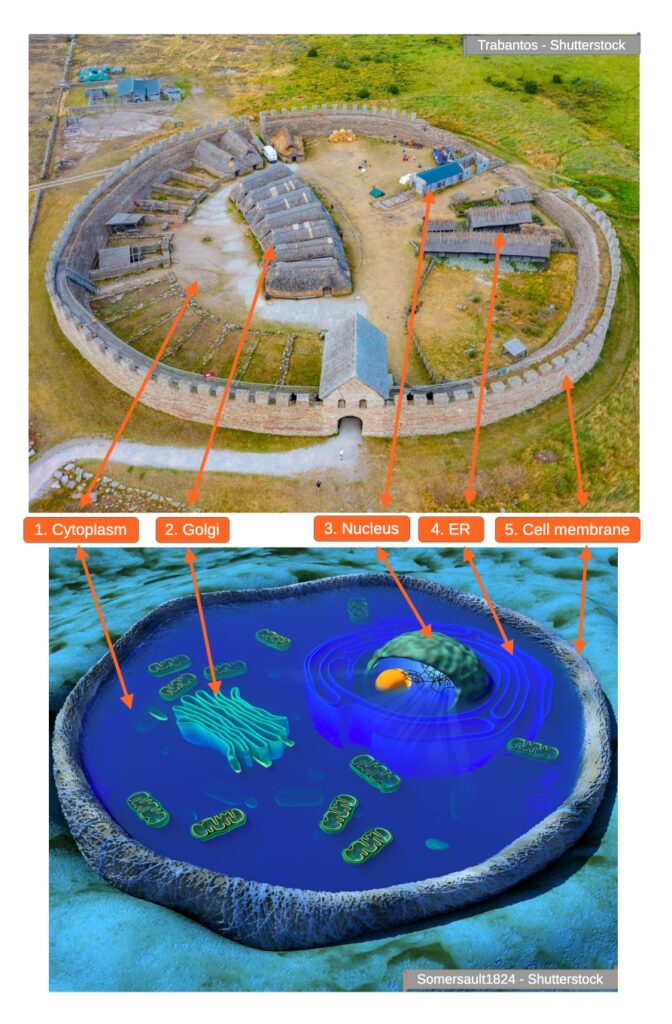
- 1. The Cytoplasm: The Inner Courtyard: Within the walls lies the expansive inner courtyard, the cytoplasm of Eketorp. This open space, teeming with life and activity, is where the daily functions of the fortress unfolded. The cytoplasm, a gel-like substance filling the cell, is the site of numerous metabolic reactions and houses various organelles. The courtyard, with its central role in the fortress’s operations, reflects the cytoplasm’s vital function in maintaining the cell’s vitality.
- 2. The Golgi Apparatus: The Buildings: Facing the church are a series of connected buildings, reminiscent of the Golgi apparatus in a cell. These structures, strategically placed, likely served as storage and distribution centers for goods and resources. The Golgi apparatus, responsible for modifying, sorting, and packaging proteins for secretion, parallels these buildings’ role in managing and distributing supplies throughout the fortress.
- 3. The Nucleus: The Temple Ruins: At the center of Eketorp, much like the nucleus in a cell, stand the ruins of a temple. This sacred site served as the spiritual and administrative heart of the fortress, guiding the lives of its inhabitants. Similarly, the nucleus directs the activities of the cell, housing the genetic material that dictates its function and reproduction. The temple, with its towering presence, symbolizes the divine authority and the central role of faith in the community, mirroring the nucleus’s pivotal role in cellular operations.
- 4. The Endoplasmic Reticulum: Surrounding Buildings: Radiating from the church are the remnants of various buildings, akin to the endoplasmic reticulum (ER) in a cell. These structures, which once bustled with daily activities, provided essential services and support to the fortress’s inhabitants. The ER, with its network of membranes, is responsible for protein and lipid synthesis, crucial for the cell’s survival. The surrounding buildings, much like the ER, facilitated the flow of goods, information, and people, ensuring the fortress’s sustenance and growth.
- 5. The Cell Membrane: The Fortress Walls: Encircling the entire complex are the formidable walls of Eketorp, serving as the cell membrane. These walls protected the inhabitants from external threats, much like the cell membrane safeguards the cell’s internal environment. The selective permeability of the cell membrane, allowing certain substances to pass while keeping others out, is mirrored in the fortress’s gates, which controlled access and ensured security.
, A Glimpse into History: Eketorp, dating back to the Iron Age, was initially constructed as a fortified village and later evolved into a medieval fortress. Its circular design, with concentric rings of defense, reflects a deep understanding of both practical and symbolic architecture. The fortress’s layout, with its ruins temple and radiating buildings, suggests an intuitive grasp of a higher order, a divine pattern that resonates with the cellular structure of life. „The Divine Blueprint” Our ancestors, through their architectural marvels, may have been more attuned to the divine than we realize. The ring fortress of Eketorp, with its cellular analogy, offers a glimpse into their understanding of God’s face, manifested in the harmony and order of their constructions. In the ancient world, architecture was not merely functional but also a profound expression of spiritual beliefs, a way to bring the divine into the tangible realm. As we continue to explore the face of God in architecture, Eketorp stands as a testament to the timeless connection between the divine and the human, a reminder that the sacred is woven into the very fabric of our existence.
Combining images and adding a description details made by Tomasz Mikulski – Cell God, date: 03/2025