1. The old citadel of Malta vs White Blood Cell.
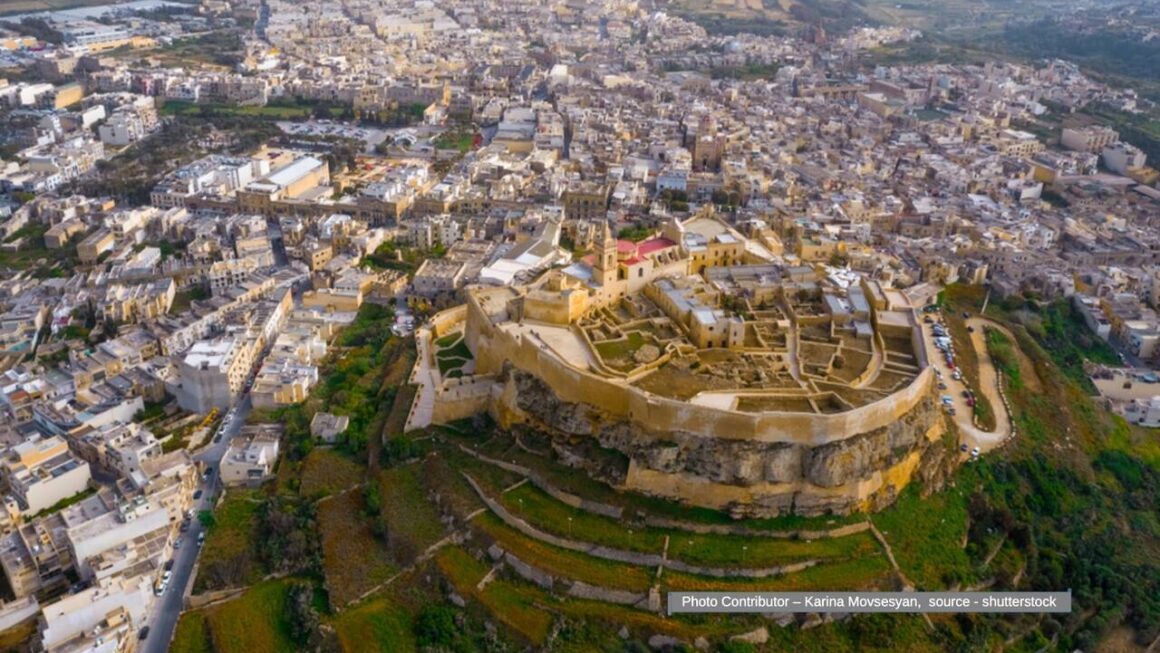
,fortified during the Bronze Age c. 1500 BC. source. https://en.wikipedia.org/wiki/Victoria,_Malta
,photo description: Aerial view of Citadel in Victoria city (Rabat) – capital of Gozo island. Malta island.
,video on YouTube, „Swimming White Blood Cell” from ,SciTech Daily
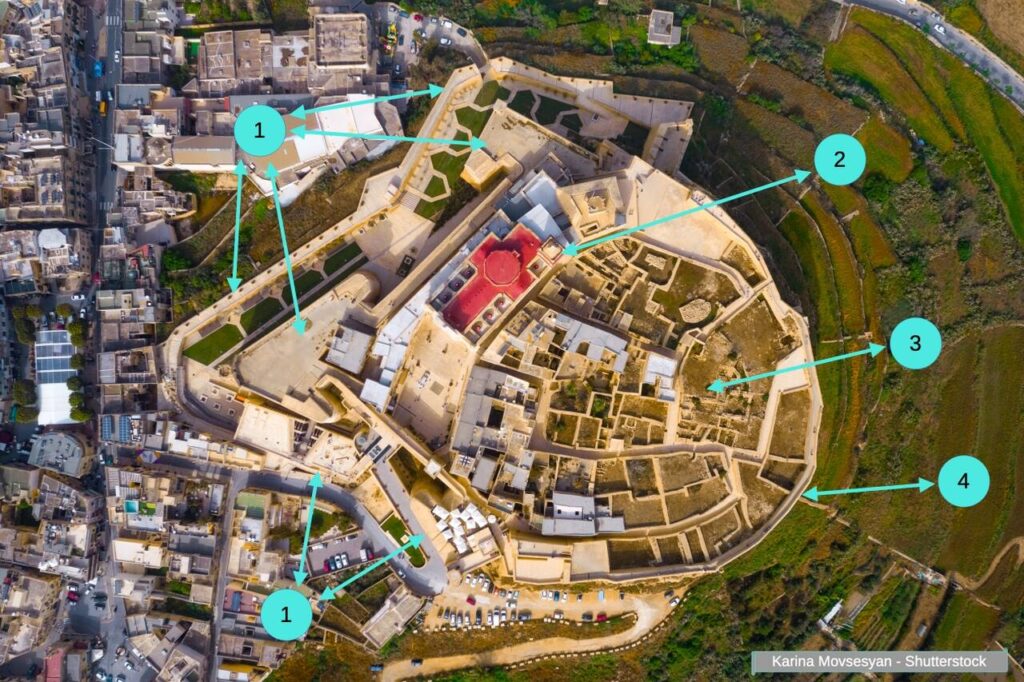
- 1. Molecular paddles – Human white blood cells use molecular paddles to swim by Cell Press. Credit: CC0 Public Domain. Human white blood cells, known as leukocytes, swim using a newly described mechanism called molecular paddling. „The capacity of living cells to move autonomously is fascinating and crucial for many biological functions, but mechanisms of cell migration remain partially understood,” says co-senior study author Olivier Theodoly of Aix-Marseille University in France. „Our findings shed new light on the migration mechanisms of amoeboid cells, which is a crucial topic in immunology and cancer research.” source. https://phys.org/news/2020-09-human-white-blood-cells-molecular.html#google_vignette
- 2. The Cathedral as Nucleus and Endoplasmic reticulum – its described in the next section.
- 3. The interior of Citadel as Cytoplasm – The cytoplasm is the location for most cellular processes, including metabolism, protein folding, and internal transportation. The cell’s plasma membrane also helps contain the cell’s cytoplasm, which provides a gel-like environment for the cell’s organelles.
- 4. The wall as cell membrane or plasma membrane – Despite differences in structure and function, all living cells in multicellular organisms have a surrounding plasma membrane (also known as the cell membrane). As the outer layer of your skin separates your body from its environment, the plasma membrane separates the inner contents of a cell from its exterior environment. source. https://bio.libretexts.org/Bookshelves/Introductory_and_General_Biology/General_Biology_(Boundless)/04%3A_Cell_Structure/4.07%3A_Eukaryotic_Cells_-_The_Plasma_Membrane_and_the_Cytoplasm
The Ancient Citadel is modeled on the shape of a white blood cell as it moves with the help of molecular paddles.
2. Cathedral interior of the Assumption of the Madonna vs Cell Nucleolus, Nucleus and Endoplasmic reticulum .
, photo description: Victoria, Gozo, Malta – June 9, 2023: Ornate interior of the historic Cathedral of the Assumption in the fortified citadel of Victoria on the island of Gozo in Malta.
, vector description:Cell Nucleus and Endoplasmic reticulum detailed anatomy with description.
, illustration description: Victoria, Gozo, Malta – June 9, 2023: Ornate interior of the historic Cathedral of the Assumption in the fortified citadel of Victoria on the island of Gozo in Malta.
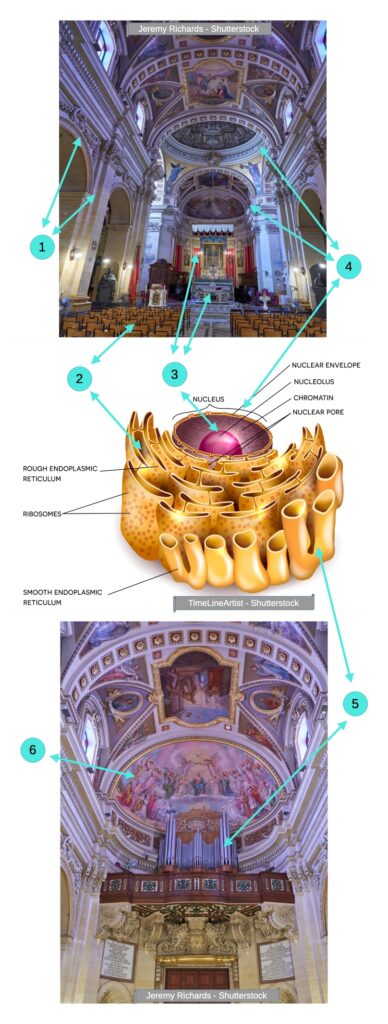
- 1. The columns and arches as Lamins – Lamins are the major part of the nucleoskeleton, providing mechanical strength and flexibility to protect the genome and allow nuclear deformability, while also contributing to gene regulation via interactions with chromatin. While lamins are the evolutionary ancestors of all intermediate filament family proteins, their ultimate filamentous assembly is markedly different from their cytoplasmic counterparts. source. https://febs.onlinelibrary.wiley.com/doi/10.1002/1873-3468.14750
- 2. The main nave as Rough endoplasmic reticulum – People sitting at the benches play the role of ribosomes.
- It helps increase the rate of protein synthesis by synthesising proteins.
- Smooth Endoplasmic Reticulum are formed from Rough Endoplasmic Reticulum by the loss o ribosomes.
- Rough Endoplasmic Reticulum is also involved in the reformation of the nuclear membrane during telophase.
- Rough endoplasmic reticulum is involved in the formation of vesicles which help in carrying chemicals from the ER to the Golgi Apparatus.
- 3. The Altar as Nucleolus – The primary function of the nucleolus in a cell is the production of ribosomes, machinery responsible for protein synthesis. The nucleolus is composed of mixture of RNA, DNA and proteins, which are important for its various functions: Ribosomal RNA: The rRNA molecules are processed within the nucleolus and help in the formation of ribosomes. These RNA molecules form the structure and functions of ribosomes. Proteins: A large number of proteins are present in the nucleolus, many of which are involved in rRNA synthesis, processing. These include transcription factors like ribonucleoproteins, and various enzymes. Noncoding RNAs: The nucleolus also contains various small noncoding RNAs that helps in rRNA processing and assembly. DNA: The nucleolus contains chromosomal known as nucleolar organizing regions (NORs). These regions are rich in genes that encode ribosomal RNA. source. https://www.geeksforgeeks.org/nucleolus-structure-diagram-its-function/
- 4. Presbytery or Dome interior as Nucleus – Function of Nucleus.
- The nucleus is known as the controller of a cell and its metabolic activities. If the nucleus is removed from a cell, the protoplasm will dry up and dies ultimately.
- The nucleus is responsible for the cell cycle, it regulates it.
- The nucleus plays an important role in transmitting hereditary traits from parent to offspring.
- The nucleus controls the protein and enzyme synthesis.
- The nucleus is the storehouse of DNA, RNA, and ribosomes.
- Replication of the nucleus is essential for cell replication.
- The nucleus directs cell differentiation by allowing certain particular sets of genes to operate.
- Ribosomes are formed in the nucleolus part of the nucleus. source. https://www.geeksforgeeks.org/what-is-nucleus-class-11-biology/
- 5. The Cathedral Organ as Smooth endoplasmic reticulum – The major role of Smooth Endoplasmic Reticulum is related to lipid synthesis.
- It is involved in the synthesis of sex hormones like testosterone and estrogens.
- The process of Glycogenolysis is also aided by the Smooth Endoplasmic Reticulum.
- Sarcoplasmic reticulum, which is a special type of SER is found in muscle cells and helps in contraction.
- It also helps in detoxification of the body by eliminating drugs like phenobarbitol and carcinogens. source. https://www.geeksforgeeks.org/endoplasmic-reticulum/#difference-between-ser-and-rer
- 6. Lipids synthesis – The endoplasmic reticulum (ER) is the main site for lipid synthesis. Intracellular lipid trafficking is necessary to maintain most other organelle membranes as they lack the capability to synthesize lipids de novo (van Meer et al. 2008). In their target locations, lipids may be present as structural compounds or they may undergo further biosynthetic modifications to generate different lipid species, some of which may be transported further to new destinations. source. https://pmc.ncbi.nlm.nih.gov/articles/PMC3140686/
The Cathedral interior is modeled on cell nucleus and Endoplasmic Reticulum rough and smooth. The altar is modeled on the nucleolus. Celebrating Holy Mass is a reproduction of the processes taking place inside these organelles such as DNA replication, transcription, post-transcriptional processes, the folding of ribosomal units and protein synthesis. In this way, our ancestors expressed the face of our God in architecture and art.
,Combining images and analysis by Tomasz Mikulski – Cell God, date: 01/2025